RF Interference in Underground Utility Locating: Causes and Troubleshooting
November 12th, 2026
5 min. read | By Michelle Specht
Topics:
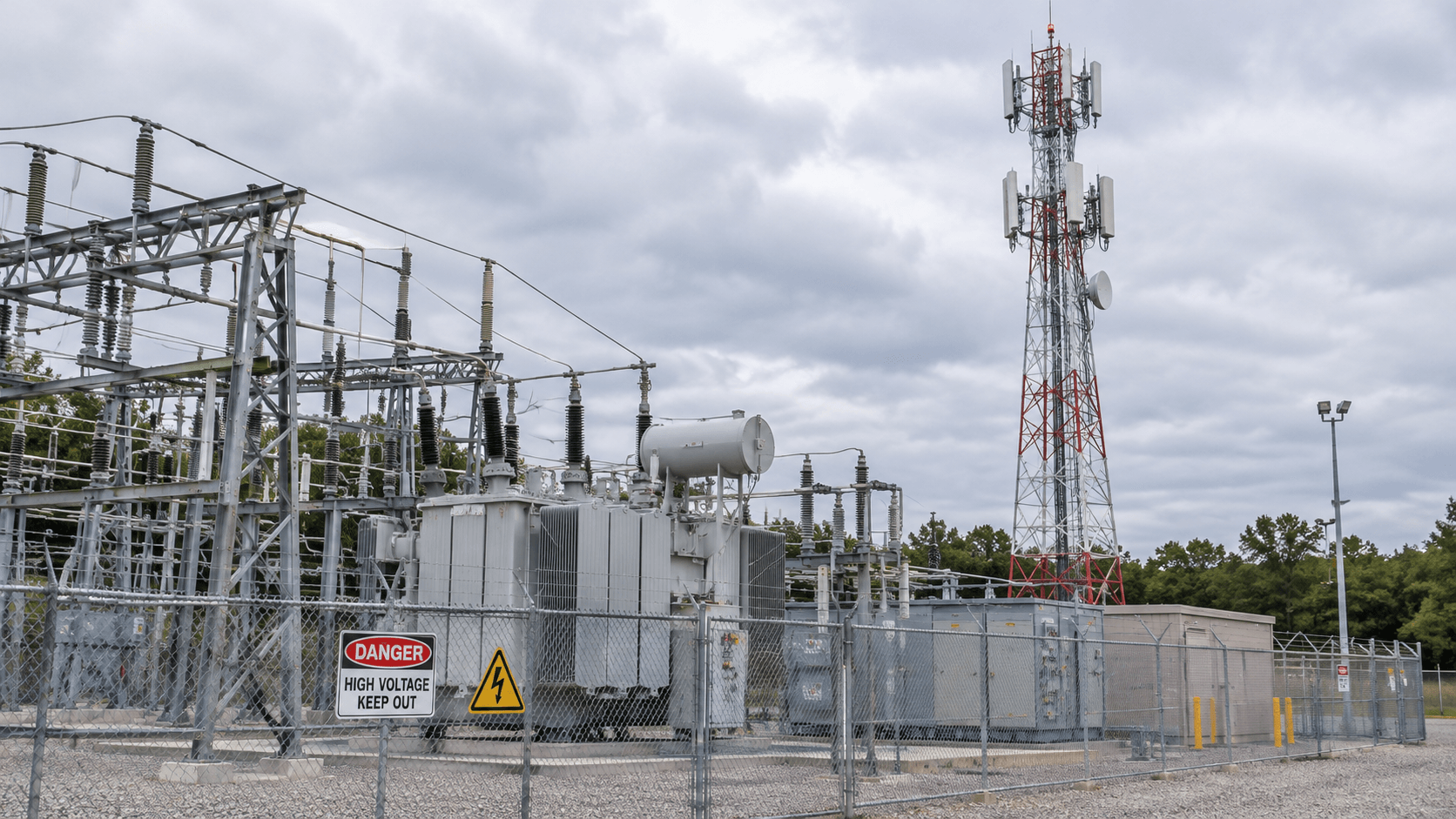
A crew is tracing a buried utility line through a congested site when the locator readings stop making sense. Signal strength drifts along the route. The depth estimate no longer matches the as-built drawing. The locator shows that something is off, but not why.
One possible cause is RF interference in the band the locator is using. While a locator's built-in interference scan can detect unwanted signal activity, it may not explain what's causing it. A spectrum analyzer provides a broader view of the signals present.
A spectrum analyzer doesn’t locate utilities. It helps technicians investigate suspected RF interference, so the crew can make more informed decisions about frequency selection and next steps.
That matters because underground utility damage costs the U.S. $83.2 billion a year, more than $227 million a day, based on 2025 damage data (Common Ground Alliance).1 That figure covers all causes. Failure to notify 811 is still the leading one, but locating and marking issues also contribute.2
How can RF interference affect underground utility locating?
RF interference can contribute to inconsistent signal readings during underground utility locating, particularly in electrically noisy environments. A spectrum analyzer helps technicians examine signal activity near the frequency of concern and investigate potential interference sources.
What Causes Interference During Underground Utility Locating?
Active utility locating applies a low-frequency electrical signal to a conductive line, then uses a receiver to detect the electromagnetic field it produces. It can work well when the signal is applied properly and nearby conductors do not distort or carry it. In congested areas, such as substations, industrial sites, and shared utility corridors, those conditions are harder to ensure.
Several conditions commonly complicate a locate:
- A weak locate signal caused by a poor connection or ground return, limiting the signal carried on the target line
- Poor signal transfer to the target line, caused by a weak electrical connection or limited inductive coupling
- Electrical noise from nearby power equipment, or signals from cathodic-protection systems and adjacent conductors
- Signal coupling onto an adjacent utility, causing the receiver to follow the unintended line
- Competing signals from nearby locator transmitters operating at the same frequency
- Electrical noise or unwanted signals near the selected frequency that obscure or distort the locate signal
Locating problems may not trigger a clear warning. They can show up as shifting readings, inconsistent depth estimates, or signal strength that changes along the route.
What Built-In Interference Detection Can (and Can't) Tell You
Many utility locating receivers include features that measure background noise across supported frequencies. This helps technicians see which frequencies may be affected by interference before choosing one for a locate. It's a useful pre-locate check, but the lowest-noise frequency isn't automatically the best choice. Frequency also affects how well the signal couples to and travels along the target line.
It is also a limited view. An interference scan reports noise at the frequencies it measures. It doesn't show the full RF environment or identify the physical source. And the scan itself doesn't confirm whether the transmitter's signal is reaching the target line effectively. When the scan flags a problem, the technician knows the conditions that may complicate the locate, but not necessarily what is causing them.
When Should You Use a Spectrum Analyzer for RF Interference?
A spectrum analyzer isn't needed for every locate. It becomes relevant when a crew has a specific RF question: What signals are present near the frequency of concern, and could one of them be contributing to the problem? For routine marking, the locator remains the field tool. A spectrum analyzer adds a way to examine RF activity when the readings are difficult to interpret. It fits best in these situations:
- High-noise or industrial sites: substations, factories, power corridors, rail lines, and airports where RF activity complicates troubleshooting.
- High-consequence work: gas transmission sites and dense utility corridors where an in-range RF source may contribute to an unexplained locate.
- Advanced troubleshooting: erratic signals or inconsistent readings when RF interference is suspected. The analyzer shows activity within its range but does not diagnose coupling or depth errors.
- Calibration labs and OEM service centers: characterizing locating equipment's RF output at supported frequencies, not verifying overall locating performance.
- Safety teams planning high-risk excavation: identifying relevant RF activity as an added diagnostic alongside established locating and excavation procedures.
How a Spectrum Analyzer Helps Troubleshoot RF Interference
A spectrum analyzer displays signal activity across a selected frequency range, helping technicians identify unwanted signals, compare received signal levels, and investigate suspected RF interference. Bird SignalHawk provides this visibility for signals within its supported frequency range.
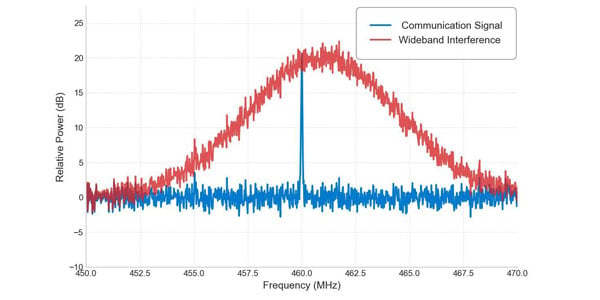
Interference doesn't have to occur at the locator's operating frequency to be detected during a broader spectrum sweep. Some noise sources are broadband or produce harmonics, allowing technicians to identify additional signal activity outside the locate frequency. These measurements can provide clues about potential interference sources, although signals observed at other frequencies do not necessarily affect the locate.
Back on the congested site, the locator response shifts, the depth estimate changes, or a nearby line also responds. The locator helps the crew follow the signal, but the reading may not explain what else is happening around that signal. Is there competing signal activity? Is it near the frequency being used? Is it changing as the crew moves along the route?
The locator's noise scan gives a frequency-specific view. When the cause of a confusing reading is still unclear, a spectrum analyzer can show signal activity across a selected frequency span, provided the signal and antenna are within the instrument's range. That helps the crew work through questions like these:
- Is there measurable signal activity near the locate frequency? A spectrum display can show energy received at the antenna, though that alone does not verify power delivered to the buried conductor.
- Are other signals present nearby in frequency? Additional peaks in the display may help explain why the receiver is operating in a noisy environment.
- Does the signal change as the crew moves through the site? Comparing measurements can show changes in received signal level, giving the crew another clue about the local RF environment.
- What signal activity is present across the analyzer's range? The SignalHawk SH-60S-TC covers 9 kHz to 6 GHz, allowing crews to examine a broad span of RF activity, including 33 kHz locate signals.
The spectrum view adds context when the crew sees an unexpected response. It can help characterize signals within its range, while questions about which conductor carries the locate current still depend on the locating measurements.
How Angle of Arrival Helps Identify an RF Interference Source
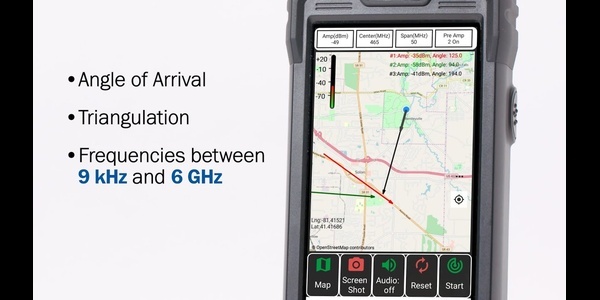
A crew is investigating an inconsistent locate near an industrial facility. The receiver's interference scan shows activity near a frequency of interest, but not where it is coming from. If the signal is within range, angle-of-arrival (AOA) measurements can help narrow the search.
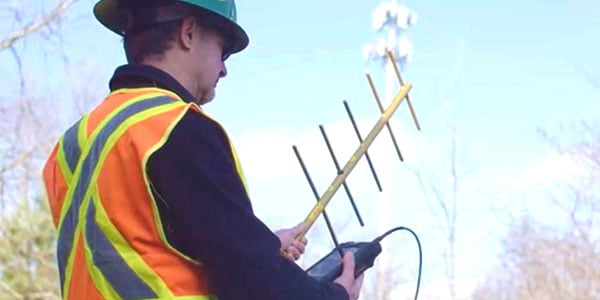
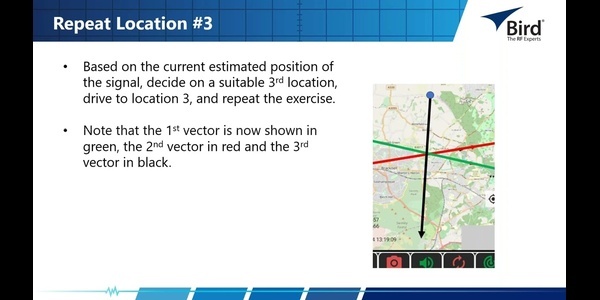
The operator takes measurements from three or more separated locations, rotating a frequency-matched directional antenna to find the direction of the strongest signal. The operator plots bearings based on each GPS position. Where the lines converge indicates an approximate source area. Reflections and antenna orientation can spread the bearing lines, so additional measurements may help refine the estimate.
The SignalHawk AOA models provide this mapping and direction-finding capability for measurable signals within their frequency range.
Prepare Your Crew for Locate Challenges
When a locate reading doesn't match what the crew sees in the field, RF interference may be one factor worth investigating. A locator's interference check focuses on its supported locate frequencies. A spectrum analyzer gives the crew a broader view of signal activity and can help assess whether an in-range signal may be contributing to the problem. Finding that signal's source requires an AOA-equipped model.
Working a locate that doesn't add up? Talk to a Bird applications engineer about using SignalHawk to investigate RF activity at your utility site.
Frequently Asked Questions
Does SignalHawk replace my EM locator or GPR unit?
No. SignalHawk analyzes RF signals. It doesn't locate buried utilities, measure depth, or perform GPR.
Do I need it for a standard 811 marking job?
Usually not. It's useful when a crew has a specific, unresolved question about RF activity.
What frequencies can Bird SignalHawk analyze?
The SH-60S-TC and SH-60S-AOA cover 9 kHz to 6 GHz. The SH-75S-AOA extends to 7.5 GHz.
How can you locate the source of RF interference?
The AOA models can help estimate an RF source's location using a suitable directional antenna and measurements from three or more positions. The SH-60S-TC does not include AOA Locate.
Who uses spectrum analyzers for utility interference troubleshooting?
Utility teams, locating contractors, and technical service groups investigating suspected RF interference at utility or infrastructure sites.
References
1 Common Ground Alliance. Between the Lines: The True Cost of Damage to America’s Buried Utilities. October 7, 2026. https://commongroundalliance.com/Publications-Media/Economic-Impact-Study
2 Damage Information Reporting Tool. 2025 Data Summary & Trends. https://dirt.commongroundalliance.com/
Michelle Specht is the Senior Product Manager at Bird Technologies, where she drives strategy and innovation across the Test & Measurement product line. With a background in Aerospace Engineering, Michelle bridges technical performance with customer needs, ensuring Bird’s wattmeters and RF solutions deliver practical value for technicians, engineers, and system operators.
Explore Posts by Topic:
Products Featured:
Contact an RF Expert at Bird
Connect with a solutions expert for knowledgeable guidance.