
RF Frequency Bands: A Practical Guide for New Engineers
June 15th, 2026
6 min. read | By Katie Wright
If you are new to RF, it can feel like the spectrum is a wall of acronyms: ELF, HF, VHF, UHF, SHF, EHF, plus IEEE L, S, C, Ku, Ka, mmWave, and more. This guide turns those labels into a mental picture you can actually use when you’re designing or troubleshooting systems.
What RF Frequency Bands Are and Why They Matter
RF frequency bands are named slices of the radio spectrum, from a few hertz up to hundreds of gigahertz, grouped because signals in each slice behave similarly and support similar applications. These bands give engineers a shared language to plan wireless links, avoid interference, and pick the right test equipment.
The International Telecommunication Union (ITU) divides the usable spectrum into numbered bands (−1 to 11 and beyond), with familiar labels like ELF, VLF, HF, VHF, UHF, SHF, and EHF. Each step up the ladder trades longer range and big antennas for shorter range, smaller antennas, and more available bandwidth.
At the very low end, ELF and VLF waves have wavelengths measured in hundreds to tens of thousands of kilometers. They are almost never used for everyday communication because efficient antennas would be continental in size, but they shine in niche roles like submarine links and atmospheric research. At the high end, EHF and proposed THF bands push toward infrared light, enabling terahertz imaging and ultra‑short‑range, ultra‑high‑data‑rate links.
How ITU Bands Map to Real-World Wireless Systems
The ITU scheme is simple: Band N covers 0.3×10^N to 3×10^N Hz. In practice, engineers usually talk in symbols: LF, HF, VHF, UHF, and so on. Those labels map cleanly onto systems you already know from daily life, which is what makes the scheme so useful.
LF (30–300 kHz, Band 5) and MF (300 kHz–3 MHz, Band 6) support AM broadcasting, navigation beacons, and time synchronization. A concrete example is NIST station WWVB at 60 kHz, which silently keeps wall clocks and instruments in sync across the United States. MF is where classic AM broadcast stations like 1100 kHz live.
Move up to HF (3–30 MHz, Band 7) and you reach shortwave. Here, signals can bounce off the ionosphere and skip across oceans, which is why amateur radio operators and international broadcasters rely on it. Go deeper into the HF story and read: The Band That Never Goes Dark
Above that, VHF (30–300 MHz, Band 8) carries FM radio (88–108 MHz), over‑the‑air TV, and land mobile radio. From the pilot descending through a 400-foot ceiling to the firefighter calling for backup, VHF is the band the world's most critical voice communications depend on. Go deeper into the VHF story and read: The Band That Runs the World
UHF (300 MHz–3 GHz, Band 9) is crowded with Wi‑Fi, Bluetooth, mobile phones, and walkie‑talkies. Beneath the surface of Wi-Fi and mobile phones, UHF carries GPS satellites, rocket flight termination systems, military tactical datalinks, and the RF power that etches circuits onto semiconductor wafers. Go deeper into the UHF story and read: The Band the Modern World Is Built On
At SHF and EHF (3–300 GHz, Bands 10–11), applications become more specialized: radar, satellite links, high‑capacity microwave backhaul, and millimeter‑wave 5G. At SHF, every decibel is earned — weather radar, military fire control, satellite uplinks, and marine navigation all depend on measurement precision that has no margin for error. Go deeper into the SHF story and read: The Band Where Physics Stops Being Forgiving
A good external overview of how bands line up with applications is provided in resources like Cadence’s frequency band guide and Electronics Notes’ radio spectrum summary
Propagation Trade-Offs: Range, Data Rate, and Antennas
Across the spectrum, three ideas repeat: lower frequency means longer range but bigger antennas; higher frequency means more bandwidth but fussier propagation; and somewhere in the middle is usually the sweet spot for a given job.
At low frequencies (ELF through HF), long wavelengths diffract around terrain and follow the Earth’s surface as ground waves. That’s why LF and MF broadcasts can cover regions or countries with modest power. The cost is antenna size: an efficient half‑wave antenna at 100 kHz is about 1.5 km long, which is only realistic for fixed infrastructure.
As you climb into VHF and UHF, wavelengths shrink to meters and centimeters. Antennas become handheld or embedded inside products, which is perfect for land mobile radios, smartphones, and IoT devices. The trade‑off is that propagation becomes mostly line‑of‑sight; hills, buildings, and even the curvature of the Earth start to block signals.
Above about 10 GHz, in SHF and EHF, rain, foliage, and even oxygen absorption start to matter. Links become highly directional and short‑range, but support enormous data rates. This is exactly why mmWave 5G and high‑throughput satellite links live in these bands: they sacrifice coverage radius in exchange for gigabit‑class throughput and tight spatial reuse.
Where 5G, Wi‑Fi, and Satellites Sit in the Spectrum
Modern systems rarely live in just one band. 5G, Wi‑Fi, and satellite operators all span multiple ITU bands so they can balance coverage, capacity, and hardware complexity for different use cases.
5G “FR1” runs roughly from 410 MHz up to 7.125 GHz, spanning the upper UHF and lower SHF bands. These frequencies behave similarly to legacy LTE and 3G, giving good building penetration and wide coverage cells. In contrast, 5G “FR2” occupies EHF between about 24.25 and 71 GHz, the classic mmWave range, delivering multi‑gigabit rates over small cells in dense urban areas.
Wi‑Fi shows a similar pattern. Classic 2.4 GHz Wi‑Fi and Bluetooth live in UHF, where signals pass through walls well enough for homes and offices. Newer 5 GHz and 6 GHz Wi‑Fi generations step into SHF, trading a bit of penetration for wider channels and higher throughput. GPS receivers work in the IEEE L‑band (around 1–2 GHz), while satellite TV and many broadband services use Ku‑ and Ka‑bands in EHF.
Satellite operators often describe links in IEEE terms—L, S, C, X, Ku, K, Ka, V, and W—rather than ITU symbols, even though both systems describe the same physics. For example, Starlink downlinks live in Ka‑band, inside the EHF range, to pack high data rates into narrow beams and reuse spectrum aggressively across thousands of beams.
Measuring RF Bands in the Field with Bird Instruments
Knowing the bands conceptually is only half the job; you also need to see what is actually happening on the air or in a transmission line. That’s where RF power measurement, VSWR, and spectrum analysis come in for bands from HF through SHF.
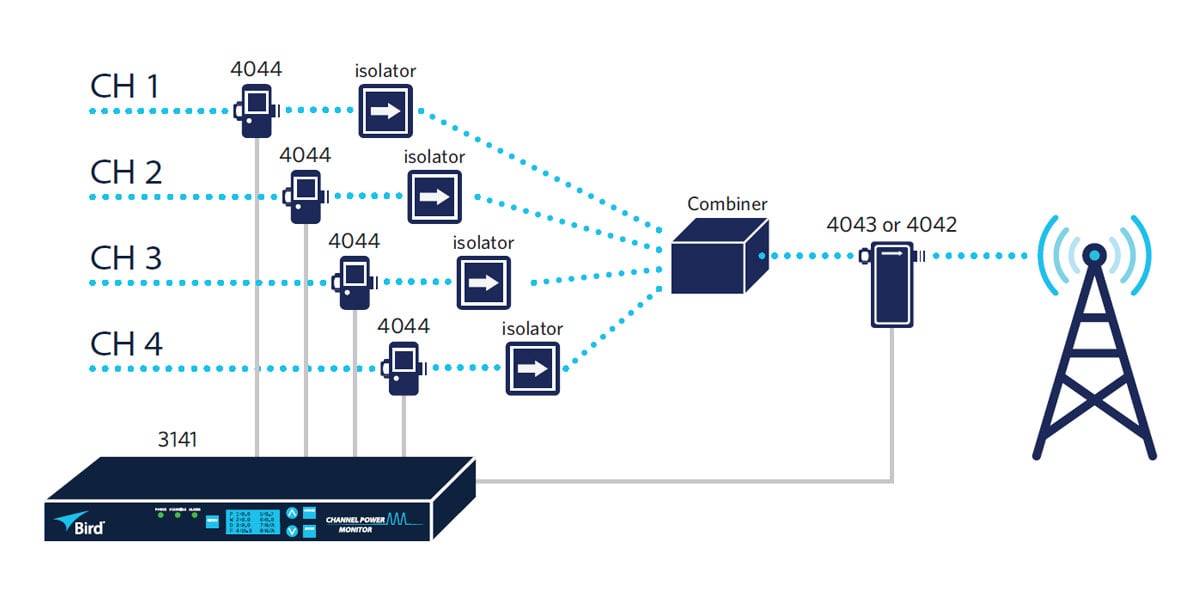
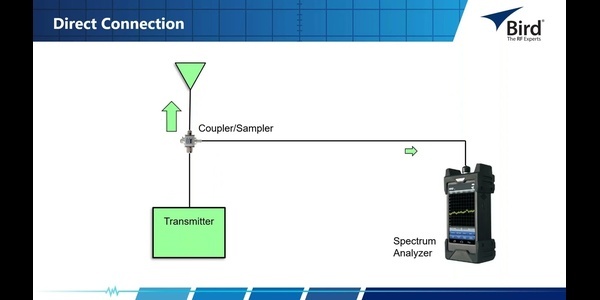
Bird wattmeters and in‑line wideband power sensors measure forward and reflected power in RF transmission lines across HF, VHF, and UHF. For example, a Bird wideband power sensor covering 25 MHz to 4 GHz lets you verify power on everything from HF marine radios to 2.4 GHz Wi‑Fi access points, up to hundreds of watts.
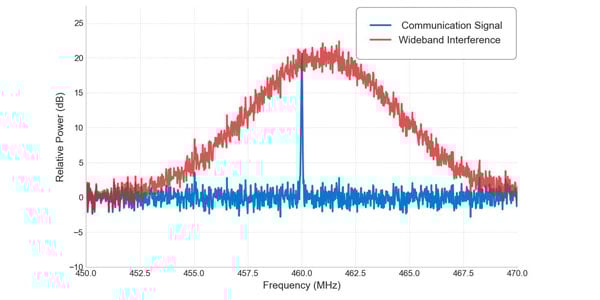
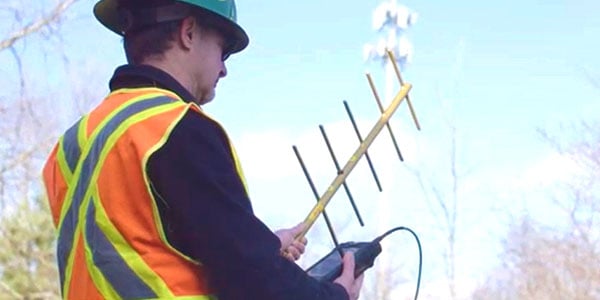
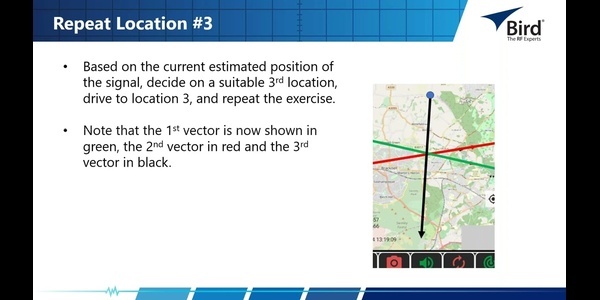
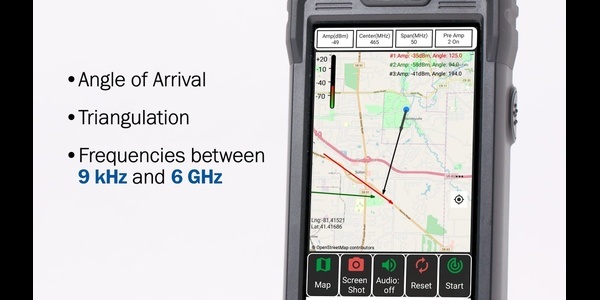
For over‑the‑air and interference work, a handheld spectrum analyzer such as the Bird SignalHawk scans from 9 kHz to 7.5 GHz, overlapping VLF through SHF. In practice, that means you can spot an illegal FM transmitter at 100 MHz in the morning and troubleshoot a noisy 5 GHz Wi‑Fi channel in the afternoon, using a single instrument.
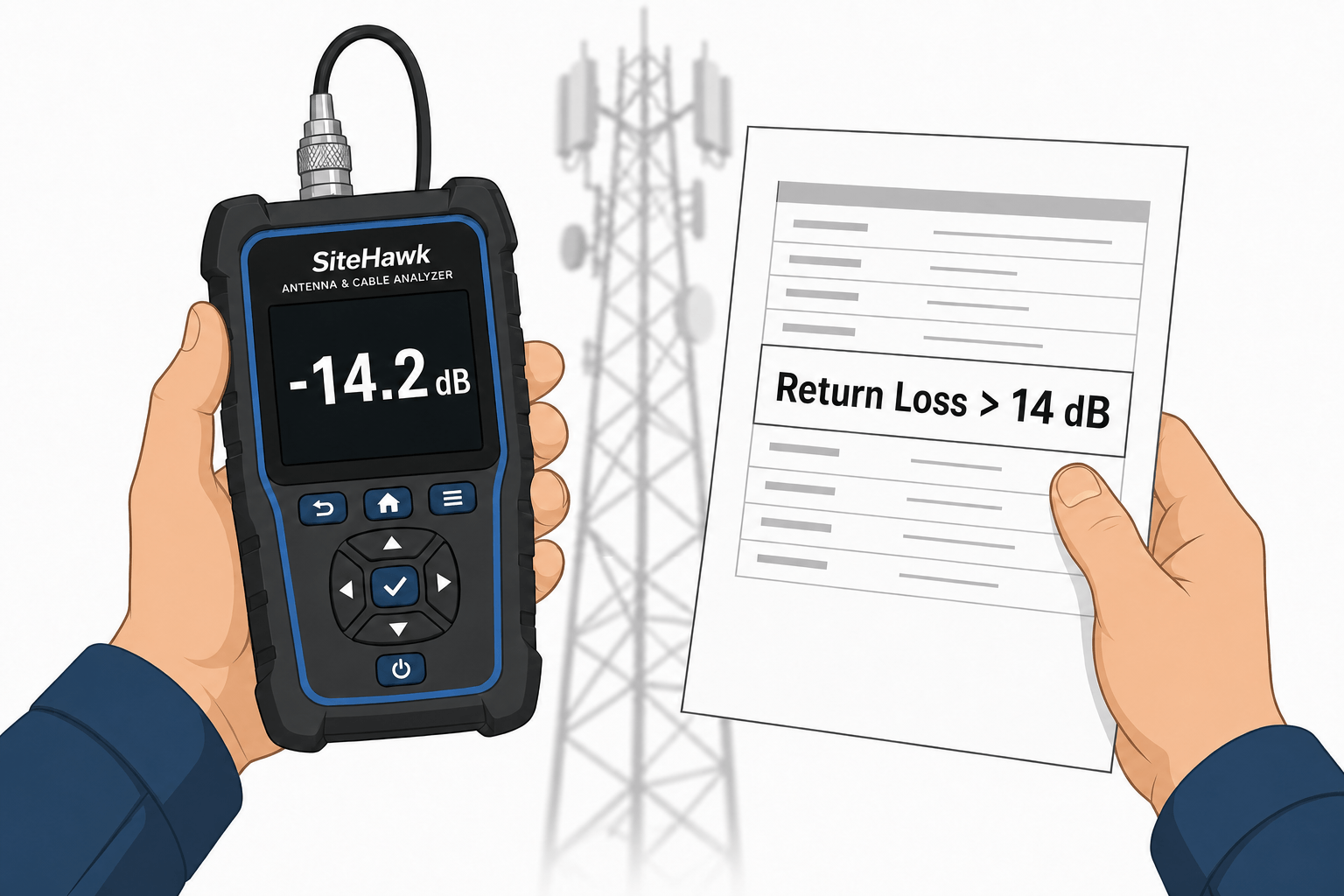
When analyzing antennas, return loss and VSWR plots show how well an antenna is matched across a band. A return loss of about −13 dB at a given frequency, like 781 MHz or 918 MHz, indicates that roughly 95% of the power is being radiated instead of reflected—good enough for many practical systems.
RF Power Measurement Methods Compared: Accuracy, Trade-Offs, and Best Practices
Free guide: the measurement decisions that affect every system in this spectrum.
Engineers ask it constantly: What is the most accurate way to measure RF power? This white paper answers that — and more. A comparative analysis of six RF power measurement methods, including directional couplers, oscilloscopes, in-line sensors, and V/I/Phase sensors. Learn what factors drive accuracy, where errors creep in, and how factory-calibrated methods reduce uncertainty across every band covered on this page.
Download the White Paper →Choosing the Right Band for Your Next RF Project
Picking a band is ultimately an engineering trade‑off constrained by regulation, hardware limits, and the environment. A clear mental model of how bands behave will save you time in design, testing, and troubleshooting.
Start from the application’s primary requirement. If you need global coverage without satellites, HF and ionospheric propagation may be your only option. If you are building mission‑critical land mobile radio for utilities or public safety, VHF or UHF with robust repeaters is usually the right fit. For short‑range, high‑capacity backhaul between towers, SHF or EHF point‑to‑point links often win.
Next, check what your regulators allow. In the United States, the FCC allocates specific blocks between roughly 8.3 kHz and 275 GHz for services like broadcast, cellular, satellite, and unlicensed ISM. Finally, match your test plan to those bands: wattmeters, power sensors, and cable and antenna analyzers for line measurements, plus spectrum analyzers to see what’s happening in the air.
With a solid grasp of RF frequency bands and the right measurement tools in hand, you can move from memorizing acronyms to confidently designing, commissioning, and maintaining real‑world wireless systems.
Frequently Asked Questions About RF Frequency Bands
How do new RF engineers learn to work with frequency bands?
New RF engineers typically begin by learning how the RF spectrum is organized and how different frequency bands are used in applications such as broadcast, cellular, satellite, radar, and land mobile radio. Hands-on experience with spectrum analyzers, power meters, signal generators, and antennas helps connect those concepts to real-world RF system performance. For example, an engineer working with land mobile radio may measure signals in the VHF, UHF, or 700–800 MHz bands to evaluate system performance.
What is the RF frequency spectrum?
The RF frequency spectrum is the portion of the electromagnetic spectrum generally ranging from 3 kHz to 300 GHz. It is divided into frequency bands used for applications such as broadcasting, aviation, public safety, cellular, radar, and satellite communications. For example, the VHF band spans 30–300 MHz and includes frequencies used for FM radio, aviation, and land mobile radio systems.
How do RF engineers measure frequency and power?
RF engineers use different test instruments depending on what they need to verify. Spectrum analyzers can confirm operating frequency and identify unwanted signals, while RF power meters and wattmeters measure transmitter power and reflected power. For example, an engineer may use a spectrum analyzer to verify a transmitter is operating at 450 MHz and a wattmeter to confirm 50 W of forward power.
Katie is an electrical engineer with more than 30 years of experience in RF test and measurement. She specializes in high-power RF measurement, product strategy, and technical thought leadership. During her time at Bird, she wrote about RF measurement accuracy, calibration, and the applications of high-power RF systems. She is also a licensed amateur radio operator (KD8FAD).
Explore Posts by Topic:
Products Featured:
Contact an RF Expert at Bird
Connect with a solutions expert for knowledgeable guidance.