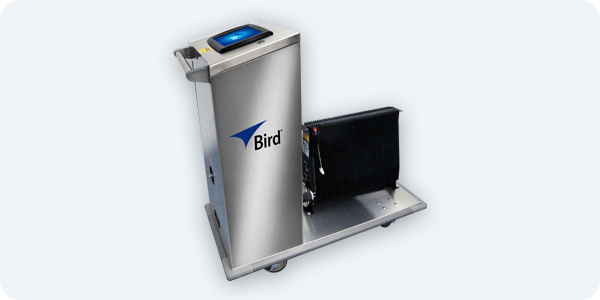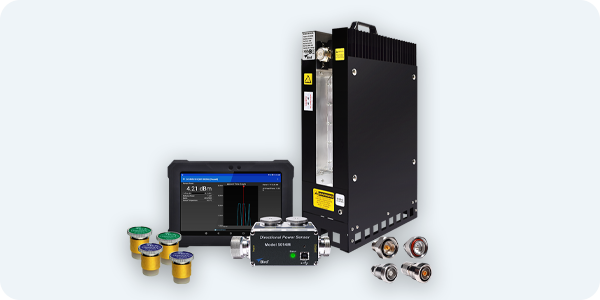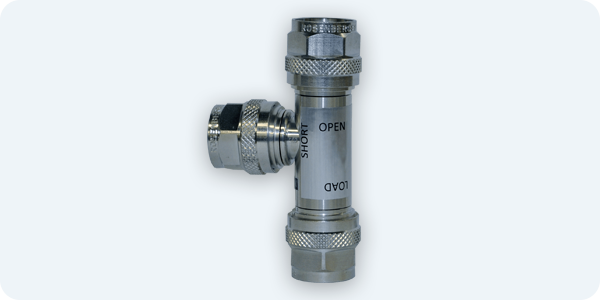
Bird’s legacy in RF calibration runs deep—dating back to our early days supplying calorimeters for high-power applications. Today, that expertise lives on in our advanced calibration equipment, trusted by labs, manufacturers, and service providers around the world.
In RF measurement, calibration is the foundation of trust. Without it, even the most advanced sensors and systems can deliver inaccurate readings—leading to faulty diagnostics, failed compliance tests, compromised safety, or inconsistent performance.
Whether you're operating a manufacturing line, maintaining critical communications, or running medical imaging equipment, precise calibration isn’t optional—it’s essential. When the stakes are high, small errors can ripple into costly consequences.
With Bird RF calibration equipment, you protect the integrity of every measurement that follows.
Have more questions? Get Expert Help>
RF calibration equipment is used to verify and adjust the accuracy of RF measurement instruments such as power meters, spectrum analyzers, signal generators, and network analyzers. Calibration ensures that measurements remain traceable, repeatable, and compliant with industry standards.
Common calibration tools include precision signal sources, attenuators, terminations, and calibration kits.
For example, a calibration source may generate a 1 GHz signal at exactly 0 dBm with an uncertainty of less than ±0.05 dB.
Calibration in RF testing ensures measurement accuracy and consistency by comparing instruments against known reference standards. Accurate calibration reduces uncertainty and helps maintain compliance with regulatory and quality requirements. Without proper calibration, RF measurements can drift over time and lead to incorrect system evaluations.
For example, a calibrated RF power meter may maintain measurement accuracy within ±3% from 25 MHz to 1 GHz.
Most RF equipment should be calibrated annually, although the interval depends on manufacturer recommendations, usage frequency, and operating conditions. Equipment used in critical applications or harsh environments may require more frequent calibration checks.
For example, a spectrum analyzer operating in a temperature range of –20°C to +50°C may require more frequent verification checks.
RF calibration involves adjusting an instrument to meet a known measurement standard, while verification simply confirms that the instrument is operating within acceptable tolerances.
Calibration usually requires traceable reference equipment and documented procedures, whereas verification is often a quicker functional check.
For example, verification may confirm a power meter reads within ±5% of expected values without performing any internal adjustments.