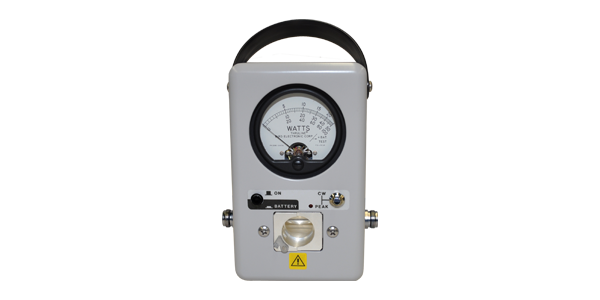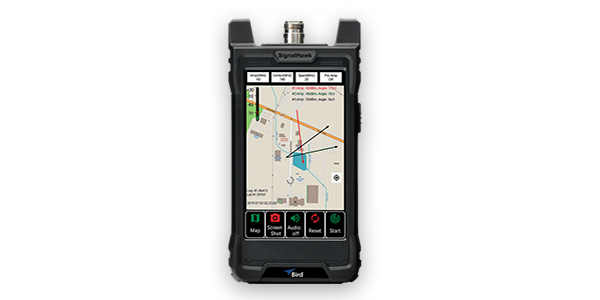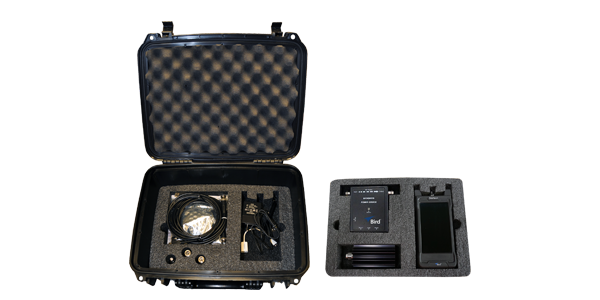
Stay connected when it matters most with Bird’s Land Mobile Radio (LMR) test equipment and RF monitoring solutions.
Engineered for public safety teams, private LMR systems, utilities, and amateur radio operators, our tools ensure clear, secure, and interoperable communication—even in the toughest environments.
From urban grids to remote terrain, Bird keeps your LMR systems mission-ready.
Providing real-time RF insights, ensuring your LMR system operates reliably in demanding environments, from public safety missions to amateur radio contests.
Ensure your LMR system delivers maximum signal strength by detecting and resolving issues like high SWR or low output power.
Quickly identify and troubleshoot RF issues, such as feedline losses or transmitter faults, with accurate power monitoring.
Imagine the stress of a critical moment—whether you're coordinating a public safety response, managing a commercial operation, or chasing a rare DX contact as an amateur radio operator—and your radio signal drops. You're left with crackling audio, missed messages, or complete silence, and you don’t know why.
Intermittent signal issues leave you scrambling, unable to pinpoint the cause without clear, real-time data.
Hidden faults in your cables or antenna system mean you're stuck with repeated site visits, mounting repair costs, and prolonged downtime that disrupts your mission or passion.
Without insight into your transmission line’s health, you're forced to react to problems after they escalate.
You need cutting-edge RF monitoring tools that outsmart elusive signal faults, keeping your mission on track and stress at bay.

With the right RF tools, your team can troubleshoot faster, spot issues sooner, and keep LMR systems running reliably.
Have more questions? Get Expert Help>
LMR (Land Mobile Radio) is a two-way wireless communication system used by public safety agencies, utilities, transportation companies, military organizations, and commercial businesses.
These systems provide reliable voice and data communications where continuous connectivity is essential.
For example, an LMR network may consist of hundreds of handheld and mobile radios operating through multiple repeater sites across a county.
RF measurement ensures that LMR systems operate safely, efficiently, and within regulatory performance requirements. Regular testing verifies transmitter power, antenna performance, frequency accuracy, and signal coverage before communication problems occur.
For example, measuring a transmitter output of 48 watts instead of its expected 50 watts may indicate developing equipment issues that warrant further inspection.
Analog LMR transmits voice as continuous radio signals, while digital LMR converts voice into digital data before transmission, improving spectral efficiency and enabling additional features.
Digital systems often provide better audio quality at weaker signal levels along with encryption, GPS, and data capabilities.
For example, a digital LMR system may support two simultaneous voice channels within a single 12.5 kHz channel using TDMA technology, whereas a comparable analog system supports only one voice channel.
Remote RF monitoring provides continuous visibility into antenna and transmission line health without requiring routine site visits. Monitoring forward power, reflected power, VSWR, and return loss helps identify developing problems before they cause outages.
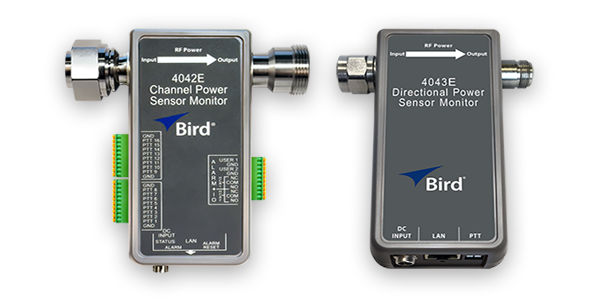
Bird's Ethernet RF sensors, including the 4042E-PTT and 4046E, provide real-time monitoring and alarm notifications for critical LMR infrastructure.
When RF performance matters, technicians trust Bird.
Our rugged, field-proven test solutions deliver accurate measurements, fast diagnostics, and reliable results across analog and digital LMR systems—including P25, DMR, and TETRA.
From signal verification to system optimization, Bird tools simplify complex RF tasks—so you can reduce downtime, meet compliance standards, and keep communications mission-ready.
Built for the field. Backed by experts. Trusted for over 80 years.