
Search for topics or resources
Enter your search below and hit enter or click the search icon.

The 4046E Receive Antenna Monitor is an Ethernet-based RF sensor for continuous, in-line receive-path monitoring. It performs scheduled return loss measurements and provides SNMP alarms to detect antenna and feedline degradation early without disrupting service.
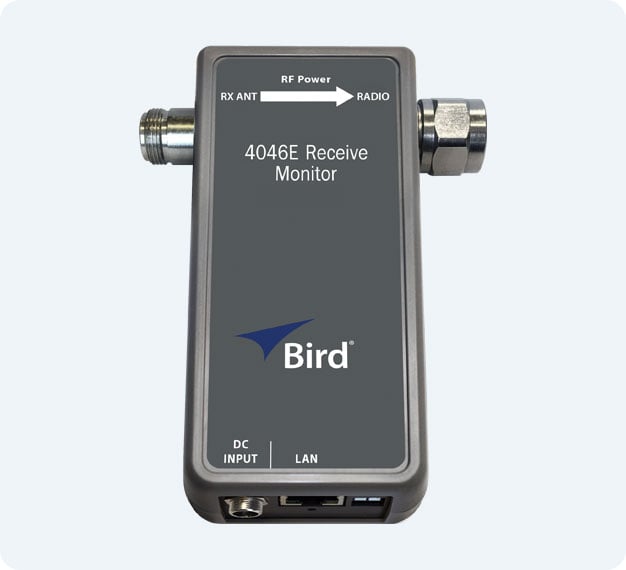
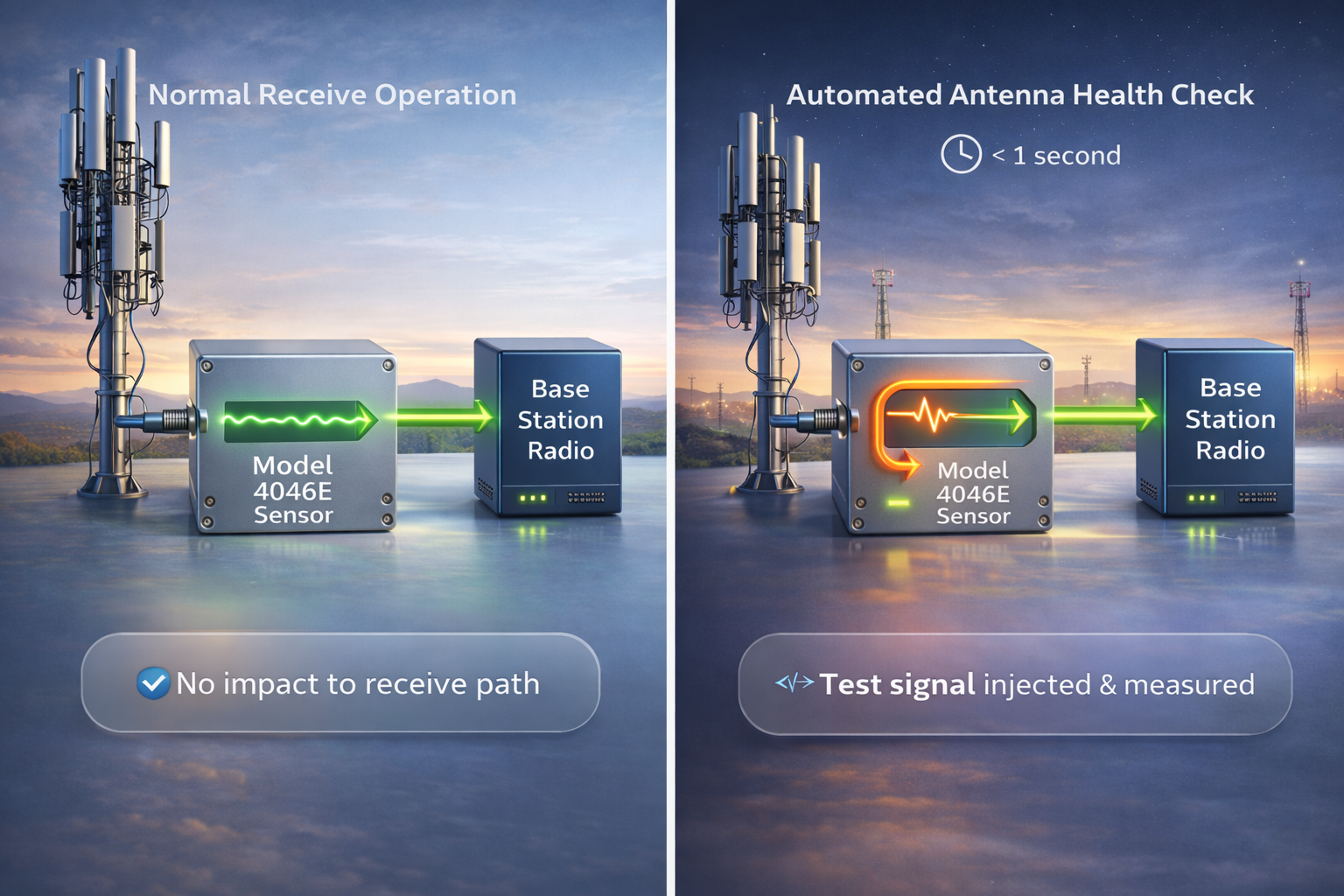
The 4046E RX Antenna Monitor is an Ethernet-based RF sensor installed in-line between the receive antenna and receiver, enabling continuous monitoring of antenna performance without disconnecting the feedline or interrupting service.
The 4046E sensor injects a controlled test signal and measures return loss at user-defined frequencies. Measurements are compared against established baseline values to identify changes over time that may indicate receive-path degradation.
Small issues in the antenna path can quietly raise loss and noise long before a transmitter fault is obvious.

Moisture in the feedline
Water intrusion changes return loss, raises noise, and reduces receive sensitivity without triggering transmit alarms.

Connector degradation
Oxidation at antenna or jumper connections degrades impedance matching, increasing loss and reflections over time.

Wind, ice, and vibration
Antenna movement and mechanical stress alter electrical characteristics and slowly degrade receive performance.

Cable and component aging
Feedlines and jumpers degrade gradually as loss increases, noise rises, and coverage slowly shrinks.
Receive antenna problems don't fail all at once. Gradual changes such as connector wear, moisture ingress, and antenna aging quietly reduce receive performance over time. Without visibility, these changes often go unnoticed until coverage gaps or degraded audio appear.
The Bird 4046E sensor gives teams in-line visibility into receive antenna performance. Installed between the antenna and receiver, it measures return loss at defined frequencies and compares results to established baselines helping teams detect meaningful changes in antenna health without a feedline disconnect.
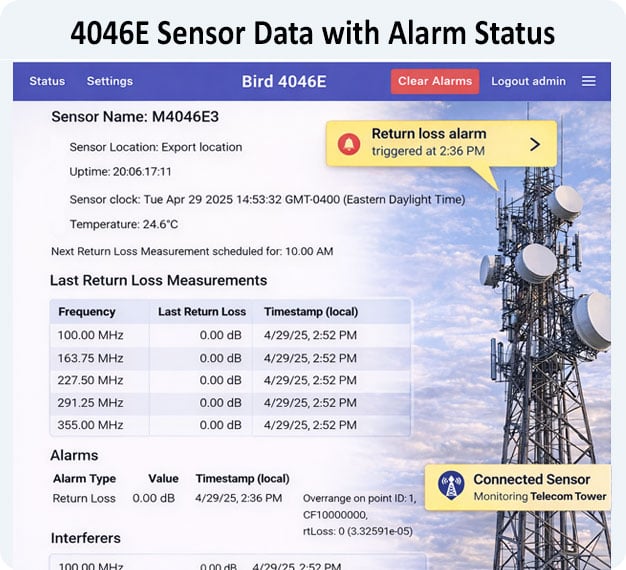
Bird’s RF monitoring sensors give you real-time visibility into the health of your transmit and antenna systems so small issues don't become coverage failures. Whether you need channel-level detail or site-level insight, you’ll know exactly what’s happening, and where to act.
Bird’s Applications Engineering team can review your site and recommend the right Ethernet RF sensor configuration for your system.