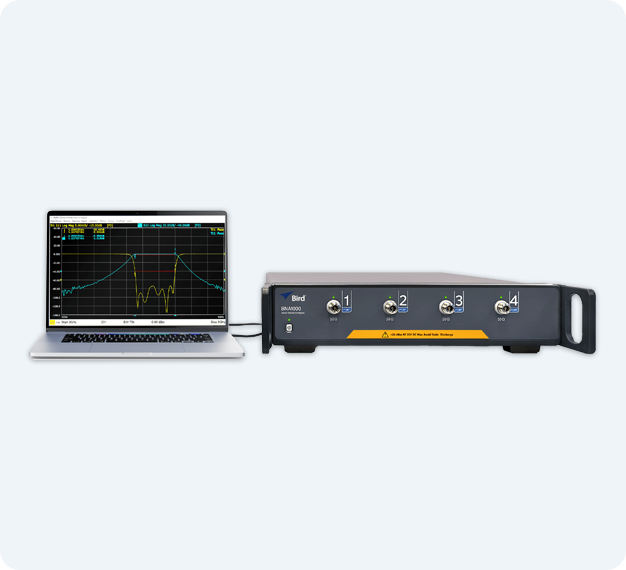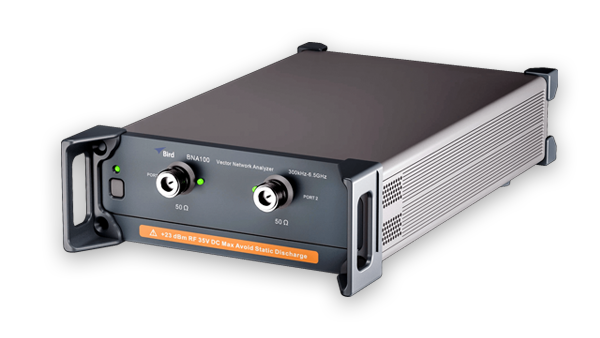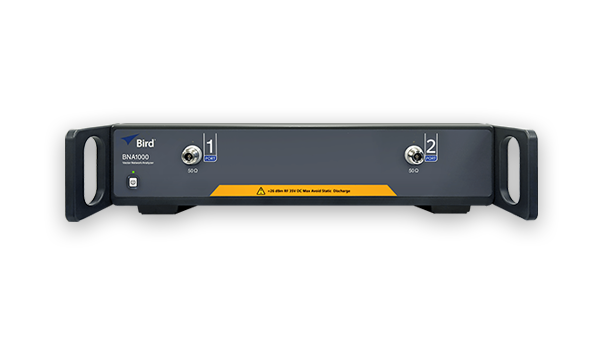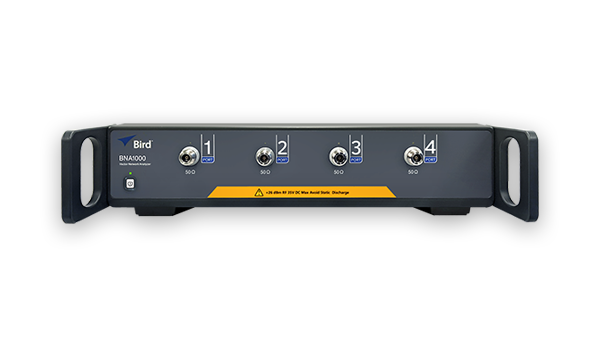
Achieve benchtop performance without straining your budget. The Bird BNA Series delivers high throughput, accuracy, and reliable performance that integrates into your development process and manufacturing environment.
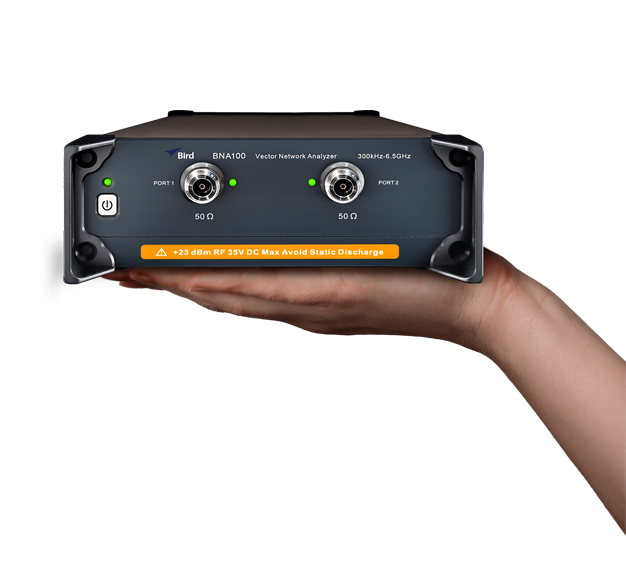
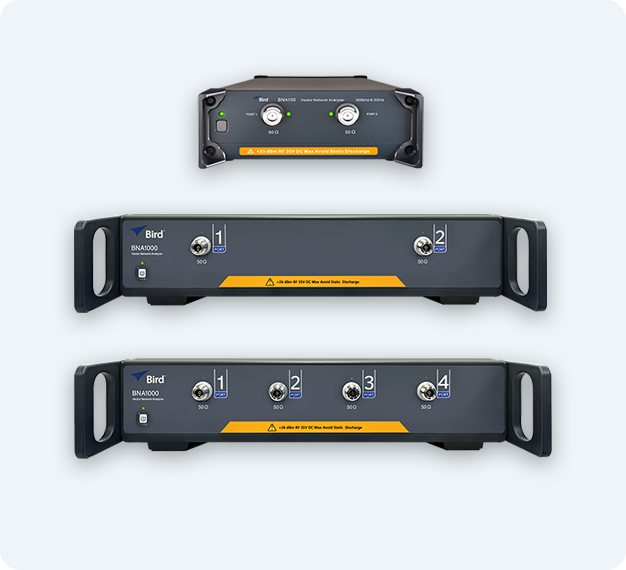
Two compact form factors.
Exceptional performance at a fraction of the others.
Maximum frequencies ranging from 6.5 GHz to 20 GHz
The Bird BNA Series delivers high-performance VNA measurements in space-saving, budget-friendly designs. Two compact form factors, powered by free TVNA software or an open API and controllable over USB, make integration simple.
Perfect for...
Showing 1 - 6 of 6 results
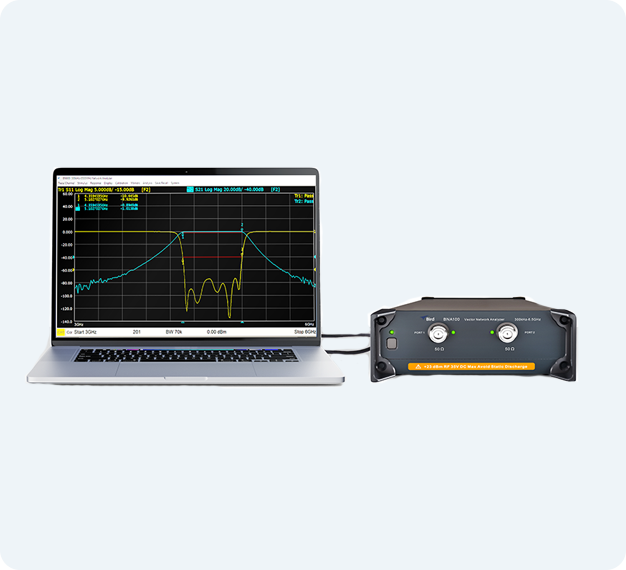
All BNA Series VNAs connect via USB—giving you flexible, full-featured control through Bird’s TVNA software. With streamlined navigation and built-in data analysis tools, TVNA makes complex RF testing clear, efficient, and actionable.
Prefer custom automation? Use our SCPI-based API to integrate with Python, LabVIEW, C#, MATLAB, and more. Explore examples on the Bird GitHub.
While a measurement calibration with an electronic calibration module or SOLT kit will compensate for added losses, phase shifts, and impedance mismatches, routine factory calibrations are still needed to ensure your VNA continues meeting specifications.
Have more questions? Get Expert Help>
A Vector Network Analyzer (VNA) is an RF instrument used to measure how signals behave as they travel through a device, typically across frequencies from low kHz range up to 50 GHz+. It quantifies how much signal is reflected (e.g., S11 = –20 dB ≈ 1% reflected), transmitted (e.g., S21 = –1 dB ≈ 80% transmitted), or lost, while also capturing both magnitude and phase (0–360°).
A Vector Network Analyzer answers questions like, Is my antenna properly matched to 50 ohms? How much signal is lost (insertion loss) through this cable or filter? Is this component behaving correctly across frequency?
A network analyzer measures magnitude only (e.g., S21 = –3 dB ≈ 50% power transmitted), while a vector network analyzer (VNA) measures both magnitude and phase (e.g., S21 = –3 dB with phase = 45° across a frequency of 1 MHz to 6 GHz), giving you a complete picture of RF performance.
Bird VNAs support both manual and electronic (ECal) calibration kits.
These kits enable field calibration using Open, Short, Load, and Through (OSLT) measurements—helping maintain measurement accuracy in real-world conditions.
The TVNA Software serves as the UI for the BNA100 & BNA1000. It can be found here. It also will come on a USB flash drive included with your VNA.
Vector Network Analyzers can be expensive because they combine high-frequency hardware, extreme measurement precision, and complex calibration into one instrument.
High-end Vector Network Analyzers can cost between $USD 100,000 to $500,000 for 50-110 GHz systems that have 140 dB dynamic range. However, hardware that once required multiple circuit boards now are found in semiconductor chip solutions and specific features are software driven.
Entry VNAs now offer 9 kHz to 6 GHz range for $5,000 - $15,000 and mid-range system, up to 20-26 GHz, are between $20,000 - $80,000.
Bird USB Vector Network Analyzers deliver fast, accurate RF measurements across a wide frequency range. Built for engineers and technicians, they feature a shared, intuitive interface and are backed by expert support—making it easy to troubleshoot, tune, and validate your RF systems with confidence.