
Key Takeaways: Remote RF Monitoring Strategy for Critical Networks
- Remote RF monitoring shifts teams from reactive troubleshooting to proactive system health management, reducing unplanned downtime across telecom and public safety networks.
- Forward power, reflected power, VSWR, and return loss are the core metrics that reveal transmission line degradation before it causes communication failures.
- Bird's Ethernet-enabled sensors and Channel Power Monitoring systems give RF engineers real-time visibility into distributed sites without requiring physical presence.
- Effective monitoring architecture balances centralized data collection with local alarm thresholds to prioritize response efforts across multi-site deployments.
- Documented response workflows transform raw monitoring data into actionable maintenance decisions that extend equipment life and maintain mission readiness.
What Is Remote RF Monitoring and Why Does It Matter?
Remote RF monitoring is the practice of continuously tracking RF system health—power levels, transmission line performance, and antenna integrity—from a centralized location without requiring physical presence at each site. For telecom networks and public safety communications, this capability addresses a fundamental operational challenge: critical infrastructure often spans dozens or hundreds of geographically dispersed sites.
The traditional approach to RF system maintenance involves scheduled site visits and reactive troubleshooting when failures occur. This model creates two problems. First, degradation often progresses undetected between visits. Second, when failures do happen, technicians arrive without knowing what tools or parts they need.
Remote monitoring changes this dynamic by making RF system behavior visible in real time. Engineers can observe trends, set alarm thresholds, and dispatch field teams with specific diagnostic information. The result is fewer truck rolls, faster resolution times, and reduced risk of communication outages during critical moments.
Who Needs a Remote RF Monitoring Strategy?
RF engineers and technicians responsible for distributed communication infrastructure face unique challenges that remote monitoring addresses directly. Public safety agencies operating P25, TETRA, or DMR systems cannot afford communication gaps during emergency response. Telecom operators managing Land Mobile Radio (LMR) networks need consistent coverage across service areas. Utility companies depend on RF links for SCADA communications and grid coordination.
The common thread is mission criticality. When RF systems fail, the consequences extend beyond inconvenience—they affect public safety, operational continuity, and regulatory compliance.
Public Safety Communications
First responders rely on radio communications that work without exception. A degraded antenna system or failing transmitter can create coverage gaps exactly when reliable communication matters most. Remote monitoring provides early warning of performance drift before it reaches the threshold of operational impact.
Industrial and Private Communications Networks
Manufacturers, hospitals, mining operations, and other industrial organizations often rely on private radio networks to support critical communications. Remote monitoring helps maintain visibility into transmitter sites, antenna systems, and network infrastructure across multiple locations. Continuous performance monitoring enables maintenance teams to identify problems early, reduce unplanned outages, and ensure communications remain available when operations depend on them.
Utility and Transportation Networks
Utilities and transportation agencies often operate RF systems in harsh or remote environments where site access is difficult. Monitoring reduces unnecessary visits while ensuring that when technicians do travel to a site, they arrive prepared to address specific issues.
What RF Metrics Should You Monitor?
Effective remote monitoring begins with selecting the right parameters to track. Not every measurement available from RF equipment carries equal diagnostic value. The metrics that matter most are those that reveal developing problems with sufficient lead time for intervention.
Forward Power
Forward power measures the RF energy traveling from transmitter toward antenna. This is the primary indicator of transmitter output health. A gradual decline in forward power often indicates amplifier degradation, while sudden drops may signal component failure or protection circuit activation.
Monitoring forward power at the transmitter output and at the antenna input reveals how much energy is being lost in the transmission line. The difference between these two measurements—insertion loss—increases as cables, connectors, and combiners degrade over time.
Reflected Power
Reflected power is energy that travels backward from the antenna toward the transmitter due to impedance mismatches. High reflected power indicates problems in the transmission line or antenna system. Common causes include damaged cables, corroded connectors, water ingress, and antenna mechanical damage.
Tracking reflected power over time reveals degradation patterns. A slow upward trend suggests progressive connector corrosion or cable damage. A sudden spike indicates an acute event requiring immediate attention.
VSWR (Voltage Standing Wave Ratio)
VSWR is a dimensionless ratio calculated from forward and reflected power that quantifies impedance matching quality. A VSWR of 1.0 represents perfect matching (no reflection), while higher values indicate increasing mismatch. Most RF systems operate acceptably with VSWR below 1.5, but values above 2.0 often trigger protective circuits and reduce effective radiated power.
The relationship between VSWR and reflected power is nonlinear. A VSWR of 2.0 means approximately 10% of forward power is reflected. At VSWR 3.0, reflection reaches 25%. Remote monitoring systems should calculate and display VSWR alongside raw power measurements to provide operators with intuitive system health indicators.
Return Loss
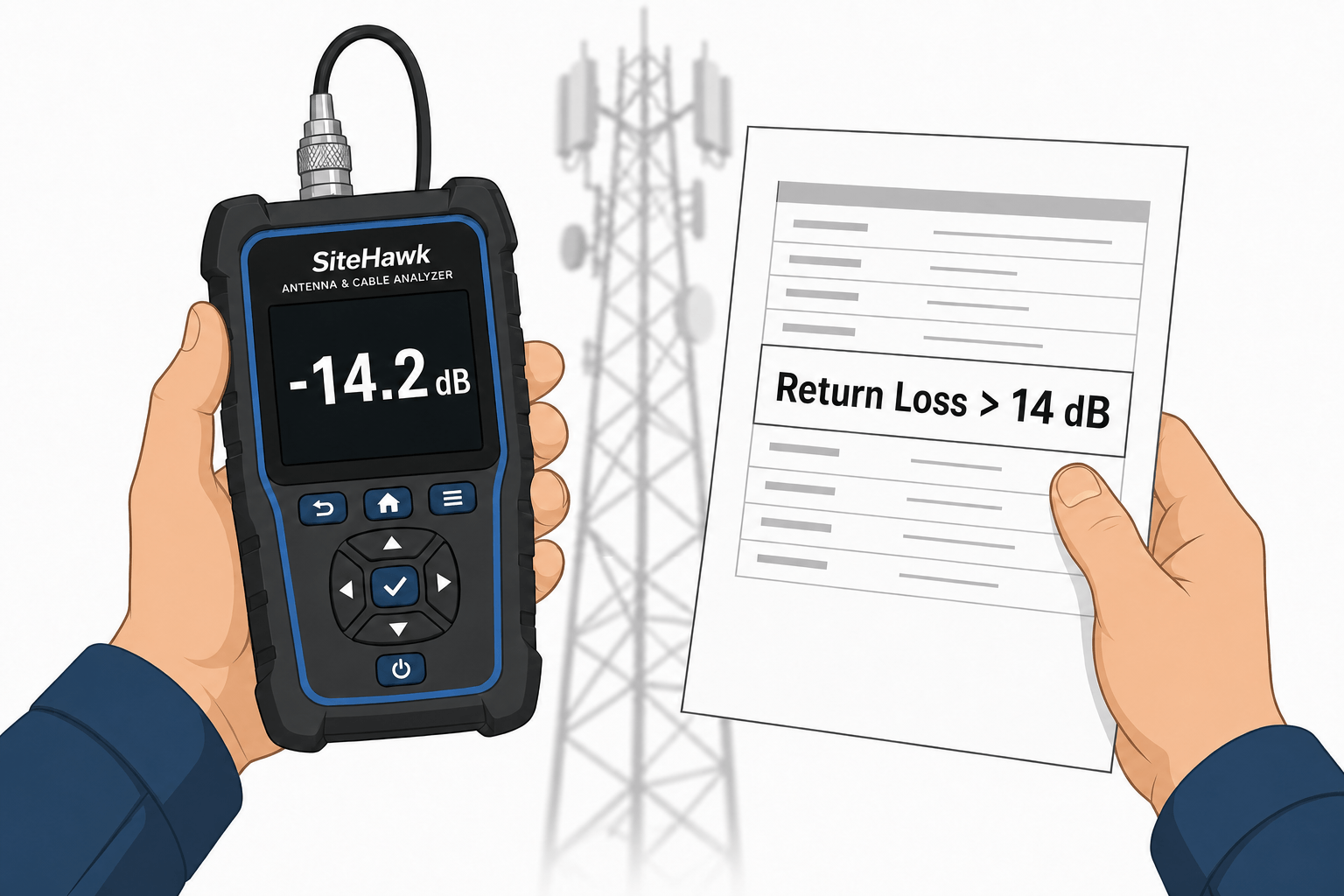
Return loss expresses the same information as VSWR on a logarithmic (dB) scale. A return loss of 20 dB corresponds to VSWR 1.22, while 10 dB corresponds to VSWR 1.93. Engineers accustomed to working with dB values often prefer return loss for comparing system performance against specifications.
The table below shows the relationship between these metrics:
| VSWR | Return Loss (dB) | Reflected Power (%) |
|---|---|---|
| 1.2 | 20.8 dB | 0.8% |
| 1.5 | 14.0 dB | 4% |
| 2.0 | 9.5 dB | 11% |
| 3.0 | 6.0 dB | 25% |
How to Design a Remote RF Monitoring Architecture
Building an effective monitoring system requires decisions about sensor placement, data transport, and centralized visibility. The architecture must balance comprehensive coverage against cost and complexity constraints.
Sensor Placement Strategy
Strategic sensor placement maximizes diagnostic capability. At minimum, monitor forward and reflected power at each transmitter output. For more granular visibility, add measurement points at combiner outputs, transmission line segments, and antenna feed points.
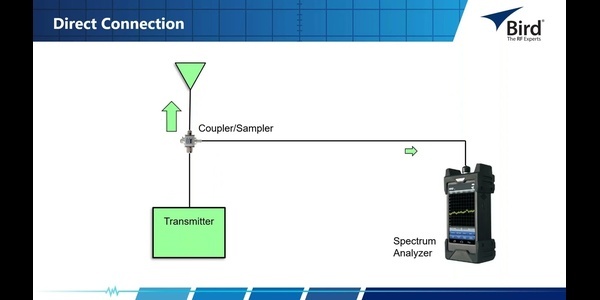
Bird's Ethernet RF Monitoring sensors install inline between transmitter and antenna, measuring forward and reflected power continuously. Each sensor connects via Ethernet to local network infrastructure, making data available to centralized monitoring platforms.
Data Transport Considerations
Remote monitoring generates continuous data streams that must reach your operations center reliably. Most modern RF monitoring sensors support standard networking protocols including SNMP, HTTP, and direct TCP/IP connections.
SNMP (Simple Network Management Protocol) integration allows RF monitoring to coexist with existing network management systems. Sensors generate SNMP traps when measurements exceed configured thresholds, alerting operators to developing problems without requiring dedicated monitoring software.
Centralized Monitoring Platform
Bringing sensor data together into a unified view transforms raw measurements into operational intelligence. A centralized platform should display current values, historical trends, and alarm status for all monitored sites.
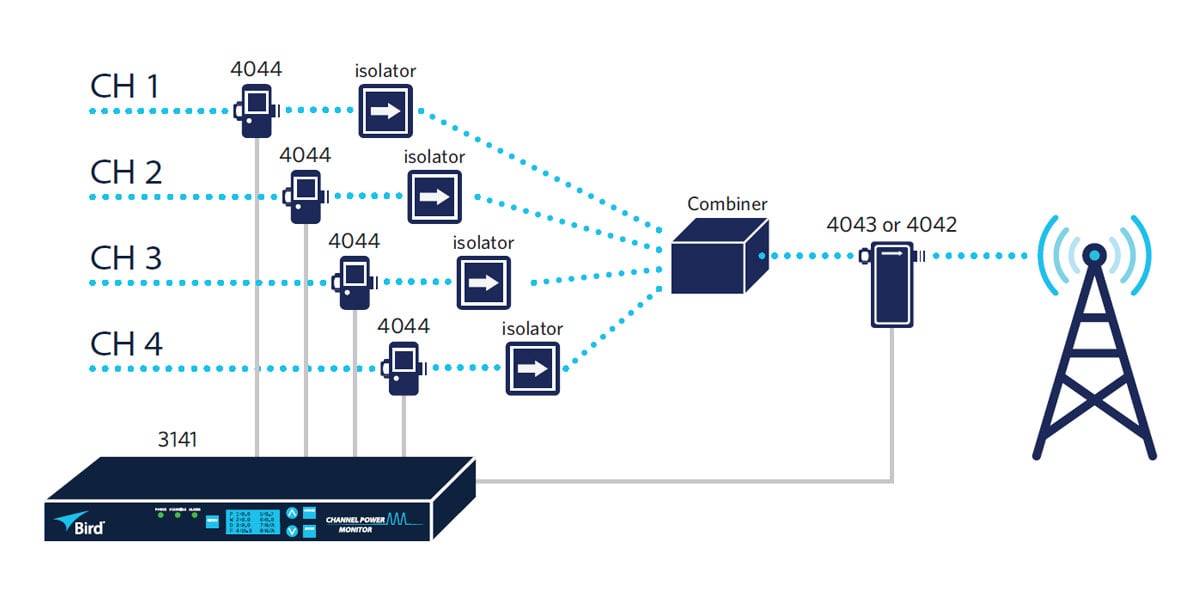
Bird's Channel Power Monitoring (CPM) system exemplifies this approach for multi-channel deployments. The rack-mounted CPM display collects data from up to 16 sensors, presenting consolidated views of system health with alarm indication and data logging. For larger deployments, CPM data integrates with enterprise monitoring systems via SNMP.
Setting Alarm Thresholds That Drive Action
Raw data becomes valuable only when it triggers appropriate responses. Alarm thresholds translate measurements into priorities, distinguishing between conditions requiring immediate attention and those warranting scheduled maintenance.
Warning vs. Critical Thresholds
A two-tier threshold system separates developing trends from urgent failures. Warning thresholds indicate parameter drift that warrants investigation during normal maintenance windows. Critical thresholds signal conditions requiring immediate response to prevent service impact.
For VSWR monitoring, a warning threshold of 1.5 alerts operators to degradation worth investigating. A critical threshold of 2.0 indicates conditions that may trigger transmitter protection circuits and reduce coverage.
Trend-Based Alarming
Some monitoring systems support rate-of-change alarms in addition to absolute thresholds. A reflected power reading that increases 2 dB over 24 hours may warrant attention even if absolute values remain within specification. Trend detection catches slow degradation that might otherwise continue until reaching critical levels.
Alarm Suppression and Acknowledgment
Effective alarm management prevents alert fatigue. Systems should support alarm acknowledgment (indicating an operator has seen the condition) and suppression (temporarily silencing alerts during planned maintenance). Without these features, operators learn to ignore alarms, defeating the purpose of monitoring.
Building Response Workflows for Remote RF Monitoring
Monitoring data achieves its purpose when it connects to maintenance actions. Documented response workflows ensure that alarms translate into appropriate interventions rather than accumulating in unread logs.
Step 1: Alarm Triage
When an alarm arrives, the first task is confirming it represents a genuine condition rather than a sensor malfunction or transient event. Compare the alarming sensor's readings against adjacent sensors or historical patterns. A sudden VSWR spike affecting multiple channels simultaneously may indicate a common-mode problem (antenna ice, tower lighting strike) rather than individual component failure.
Step 2: Remote Diagnostics
Before dispatching a technician, extract maximum information from available data. Review historical trends for the alarming parameter. Check whether other monitored points at the same site show anomalies. Use remote access to transmitter status displays if available. This preparation ensures the field technician arrives with a hypothesis to test rather than starting diagnosis from scratch.
Step 3: Prioritized Dispatch
Not every alarm requires immediate site visit. Categorize responses based on operational impact and urgency:
- Immediate: Conditions affecting coverage or safety communication capability
- Same-day: Degradation approaching operational thresholds
- Scheduled: Trends indicating maintenance needed within days or weeks
Step 4: Field Verification and Repair
Armed with remote diagnostic information, field technicians perform targeted verification and repair. Portable test equipment like Bird's Cable and Antenna Analyzers confirms remote measurements and localizes faults to specific components.
Step 5: Post-Repair Verification
After completing repairs, verify that monitored parameters return to normal ranges. Document pre-repair and post-repair measurements to build institutional knowledge about failure modes and repair effectiveness. This data improves future diagnostic accuracy and helps predict component replacement intervals.
Common Challenges in Remote RF Monitoring
Implementing remote monitoring involves practical obstacles that planning and appropriate technology selection can address.
Network Connectivity at Remote Sites
Some tower sites and remote facilities lack reliable IP connectivity for real-time monitoring. Options include cellular backhaul, satellite links, or store-and-forward data collection during periodic site visits. Even intermittent connectivity provides value compared to no visibility between scheduled maintenance.
Environmental Factors
RF system performance varies with environmental conditions. Temperature changes affect amplifier output and transmission line characteristics. Ice loading on antennas increases VSWR. Wind causes cable movement that may stress connectors. Effective monitoring accounts for these factors by correlating RF measurements with weather data and adjusting alarm thresholds seasonally.
Legacy Equipment Integration
Existing RF infrastructure may lack native monitoring capability. Retrofit solutions including in-line power sensors add monitoring to legacy systems without requiring equipment replacement. Bird's wideband sensors measure forward and reflected power across frequencies from 25 MHz to 4 GHz, covering most LMR and public safety bands.
Data Overload
Monitoring many sites continuously generates substantial data volumes. Effective systems filter and summarize information, presenting operators with actionable views rather than overwhelming detail. Historical data should be retained for trend analysis but need not consume constant attention.
Selecting Equipment for Your Monitoring Strategy
Equipment selection depends on the scale of deployment, existing infrastructure, and specific monitoring requirements.
In-Line Ethernet Sensors
Bird Ethernet RF Sensors install permanently in the RF transmission path and continuously monitor forward power, reflected power, VSWR, and return loss. Available in multiple frequency and power configurations, these sensors communicate directly over Ethernet using SNMP and web-based interfaces, enabling integration with network management systems and remote monitoring platforms.
By providing real-time visibility into transmitter and antenna system performance, Bird’s Ethernet RF Sensors can alert operators to developing problems before they result in coverage degradation, service interruptions, or equipment damage.
This architecture is well suited for public safety radio sites, utility communications networks, cellular infrastructure, and other unmanned facilities where continuous visibility is required.
In-Line Wideband Power Sensors
While continuous monitoring provides visibility into system health, troubleshooting often requires more detailed measurements. Bird 5000 Series Wideband Power Sensors deliver accurate RF power measurements from 25 MHz to 4 GHz with support for a wide range of analog and digital signal types.
In addition to average power and VSWR measurements, they provide advanced capabilities such as peak envelope power, burst average power, crest factor, CCDF analysis, and video filtering.
Commonly used during installation, maintenance, and fault investigation, these sensors provide measurement insight beyond that available from traditional wattmeters, helping technicians validate system performance and diagnose RF issues more effectively.
Channel Power Monitoring
For facilities with multiple transmitters, rack-mounted CPM systems consolidate monitoring for up to 16 RF channels. Dedicated sensors at each transmitter feed a central display unit that provides local visualization and remote data access. This architecture suits public safety simulcast sites, commercial LMR trunking systems, and broadcast facilities.
Portable Test Equipment
Remote monitoring identifies that a problem exists; portable test equipment helps technicians locate and characterize the source.
Cable and antenna analyzers verify transmission line and antenna system performance by measuring VSWR, return loss, and distance-to-fault.
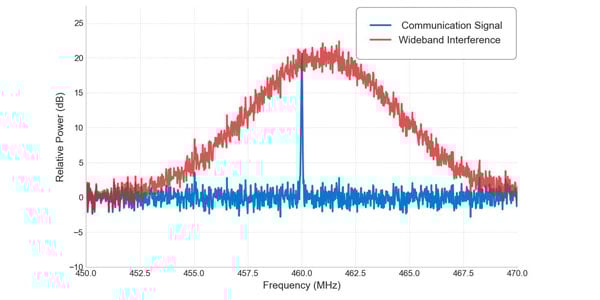
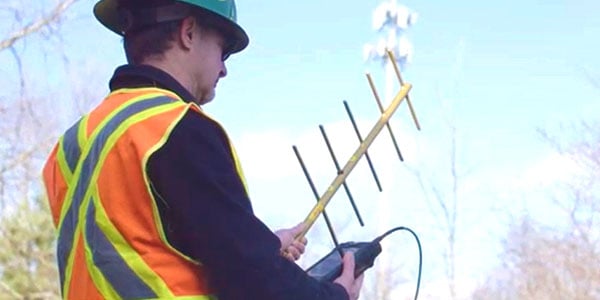
Spectrum analyzers identify interference sources, evaluate signal quality, and confirm transmitter performance in the field.
Together, these tools provide the on-site diagnostic capabilities needed to isolate faults, validate repairs, and restore system performance with confidence.
Measuring the Value of Remote RF Monitoring
Quantifying monitoring benefits helps justify investment and track program effectiveness.
Reduced Truck Rolls
Each avoided site visit represents direct cost savings in technician time, travel, and vehicle expenses. Remote diagnostics ensure that when visits do occur, technicians arrive prepared with the right parts and tools, reducing repeat trips.
Faster Mean Time to Repair
Pre-diagnosed problems resolve faster than those requiring on-site discovery. Track mean time from alarm to resolution as a program metric. Effective monitoring programs show improvement as operators gain experience correlating remote data with field conditions.
Extended Equipment Life
Catching degradation early prevents cascading failures that damage additional components. A transmission line problem detected at 1.8 VSWR can be scheduled for repair before it stresses transmitter protection circuits. Operating equipment within specifications extends service life and defers capital replacement.
Improved Uptime
For mission-critical communications, uptime is the ultimate metric. Track unplanned outages and compare against historical baselines. Remote monitoring should demonstrate measurable improvement in system availability.
How Bird Supports Remote RF Monitoring for Critical Infrastructure
Bird brings over 80 years of RF measurement expertise to remote monitoring applications. Our Ethernet RF Monitoring solutions combine field-proven sensor technology with network connectivity that integrates into existing infrastructure management systems.
The key differentiator is measurement accuracy maintained in demanding environments. Bird sensors deliver NIST-traceable calibration with specifications that hold up under continuous operation. When monitoring data shows a problem, you can trust that the measurement reflects actual system conditions rather than sensor drift.
For public safety and telecom networks, Bird's Channel Power Monitoring systems scale from single-site installations to enterprise-wide deployments. Local display units provide immediate visibility while SNMP integration feeds data into centralized network operations centers.
In Conclusion: Building Your Remote RF Monitoring Capability
Effective remote RF monitoring transforms maintenance from reactive troubleshooting to proactive system management. The investment in sensors, connectivity, and monitoring infrastructure pays returns through reduced downtime, lower maintenance costs, and improved mission readiness.
Start by identifying critical parameters for your specific infrastructure: forward power, reflected power, VSWR, and temperature at minimum. Select sensor technology that matches your frequency bands and power levels. Design an architecture that brings data to operators who can act on it. Establish alarm thresholds that distinguish routine variation from developing problems. Document response workflows that connect monitoring data to maintenance actions.
The goal is not monitoring for its own sake—it is maintaining reliable RF communication when lives and operations depend on it.
FAQs About Remote RF Monitoring Strategy for Critical Networks
What is the minimum equipment needed to start remote RF monitoring?
At minimum, you need an in-line power sensor with network connectivity at each transmitter location. Bird's Ethernet-enabled sensors measure forward and reflected power continuously, delivering data to your operations center via SNMP or direct IP connection. This baseline configuration provides visibility into transmitter health and transmission line integrity.
How often should remote monitoring systems report data?
Most systems report at intervals between 1 second and 5 minutes depending on the parameter and criticality level. Power measurements typically update every few seconds for real-time visibility. Alarm conditions should trigger immediate notification regardless of scheduled reporting intervals.
Can remote monitoring replace scheduled site visits entirely?
Remote monitoring reduces but does not eliminate the need for physical site visits. Monitoring reveals electrical system behavior but cannot detect all mechanical conditions such as tower structural issues, vegetation encroachment, or physical security concerns. Most organizations shift from time-based maintenance schedules to condition-based maintenance informed by monitoring data.
What VSWR threshold indicates a problem requiring attention?
VSWR below 1.5 is generally acceptable for most RF systems. VSWR between 1.5 and 2.0 warrants investigation and scheduled maintenance. VSWR above 2.0 may trigger transmitter protection circuits and should prompt expedited response. Bird's monitoring systems allow you to configure warning and critical thresholds appropriate for your specific equipment and operational requirements.
How does Bird's remote monitoring integrate with existing network management systems?
Bird monitoring equipment supports SNMP protocols, enabling direct integration with enterprise network management platforms. SNMP traps alert operators to threshold exceedances. SNMP polling retrieves current values and trend data. This standards-based approach allows RF monitoring to join existing workflows rather than requiring separate monitoring infrastructure.
What environmental factors affect RF monitoring accuracy?
Temperature changes affect both RF system behavior and sensor accuracy. Quality sensors include temperature compensation to maintain measurement accuracy across operating ranges. Weather conditions—particularly ice and moisture—cause temporary VSWR increases that may not indicate equipment damage. Correlating RF data with environmental conditions helps distinguish transient effects from persistent problems.
Need recommendations for your site? Let Bird help you identify the right combination of remote monitoring and test equipment for your network. Start your discussion now.
Katie is an electrical engineer with more than 30 years of experience in RF test and measurement. She specializes in high-power RF measurement, product strategy, and technical thought leadership. During her time at Bird, she wrote about RF measurement accuracy, calibration, and the applications of high-power RF systems. She is also a licensed amateur radio operator (KD8FAD).
Explore Posts by Topic:
Products Featured:
Contact an RF Expert at Bird
Connect with a solutions expert for knowledgeable guidance.