
Why Digital Signals Demand Digital Solutions
January 9th, 2026
5 min. read | By Michelle Specht
Topics:

The Case for the Bird 4480A Wattmeter
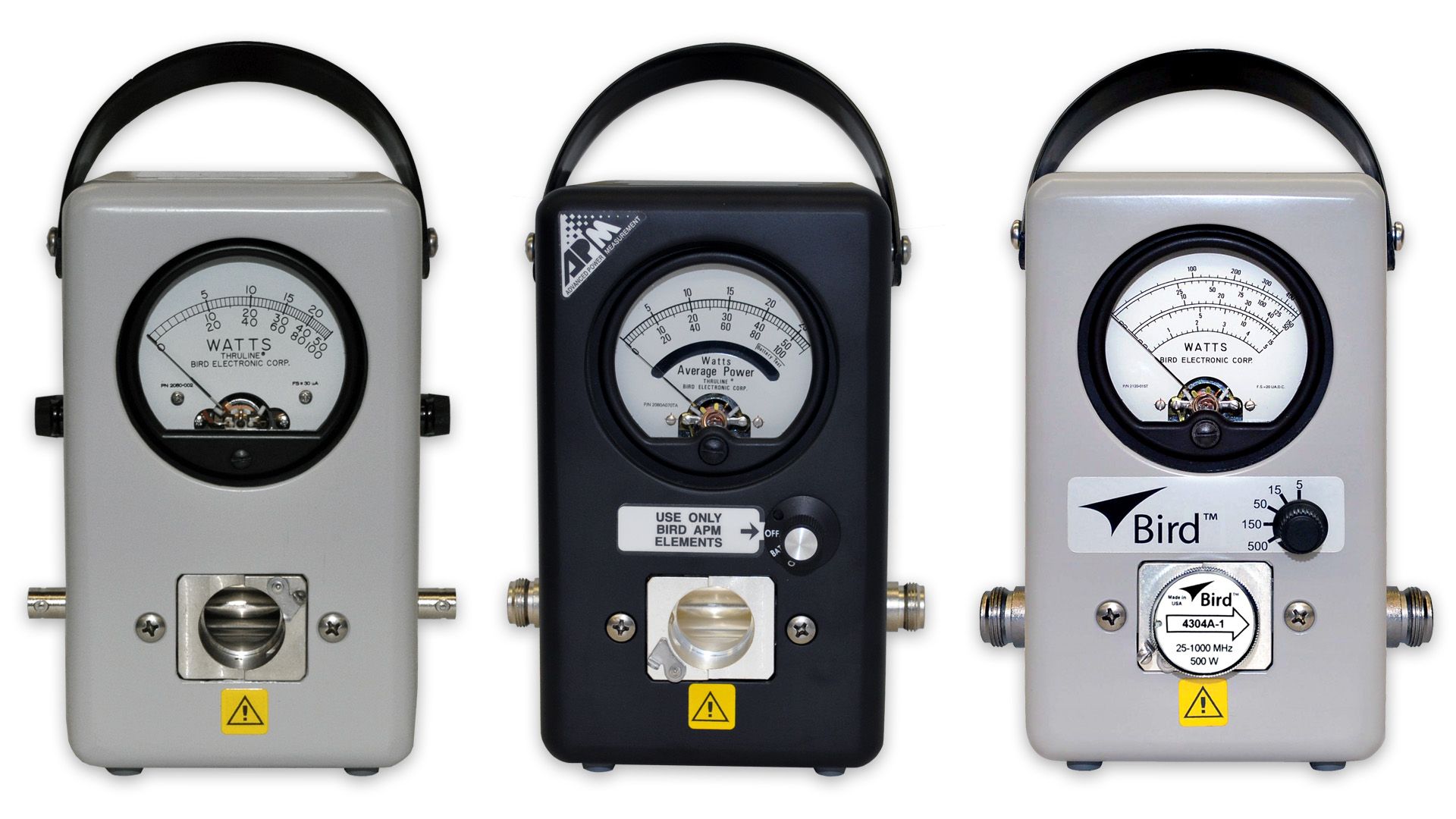
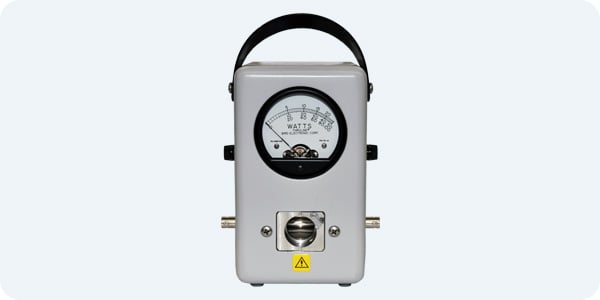
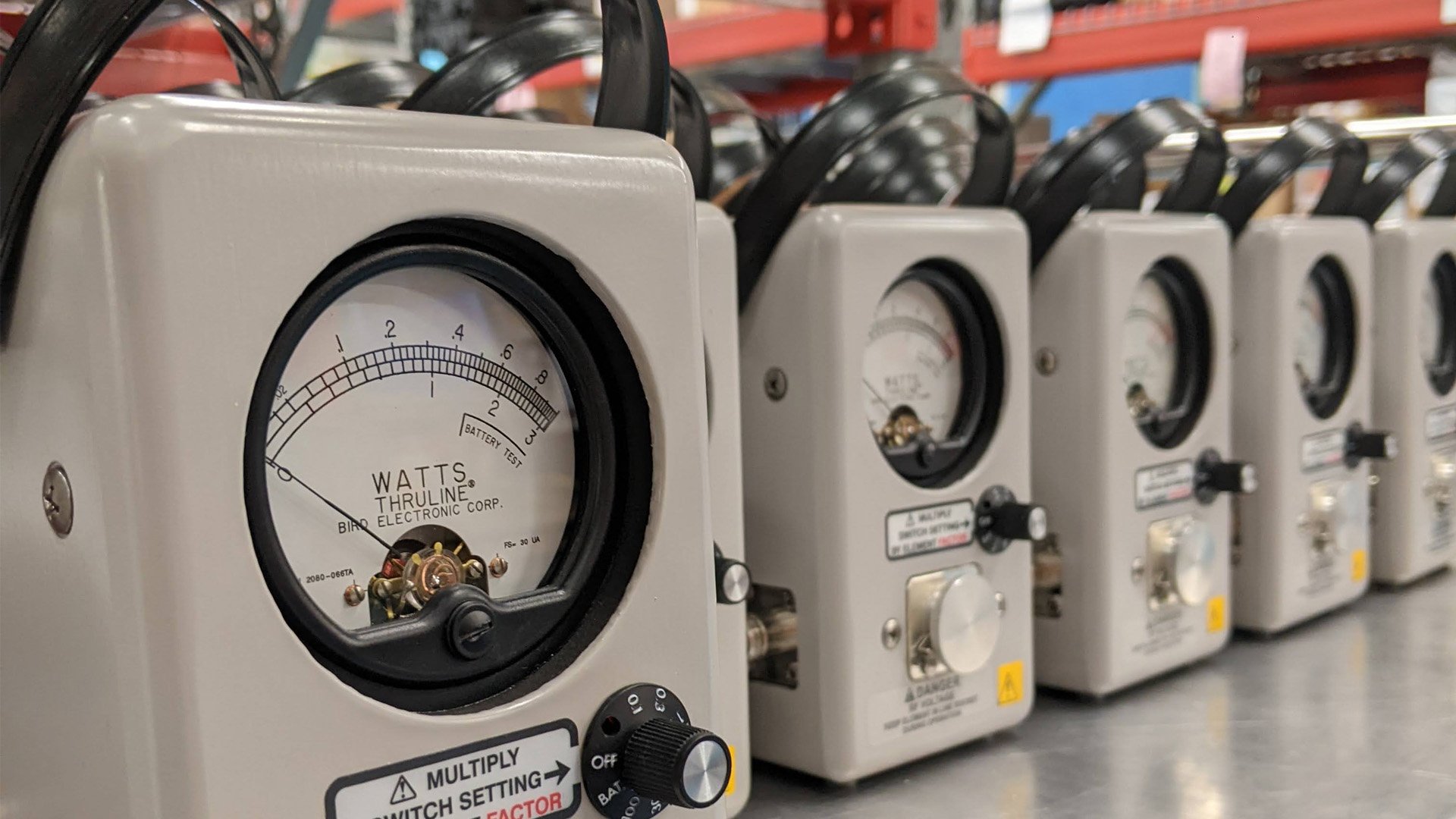
For more than 80 years, Bird has delivered RF power measurement solutions that engineers and technicians trust. From the iconic Model 43 Thruline® Wattmeter introduced in the 1950s to advanced field instruments used across military, telecommunications, and public safety applications, Bird's element-based wattmeters have set the standard for accuracy, durability, and technician-trusted performance. That legacy continues—but so does the evolution.
Today's RF landscape looks dramatically different than it did even a few decades ago. Communication systems have shifted from traditional analog signals to increasingly complex digital modulation formats that enable higher data rates, improved spectral efficiency, and enhanced performance in challenging environments. This transformation has introduced a critical measurement challenge: traditional analog wattmeters are no longer well suited to accurately measure the power of these modern signals.
If your communication system has transitioned from constant amplitude modulation formats like continuous wave (CW) or frequency modulation (FM) to digital modulation schemes with varying amplitude transmission signals, your trusted analog wattmeter is giving you inaccurate readings. It's time to consider an upgrade to the Bird 4480A Digital Wattmeter.
Why Traditional Analog Wattmeters Fail on Digital Modulation Signals
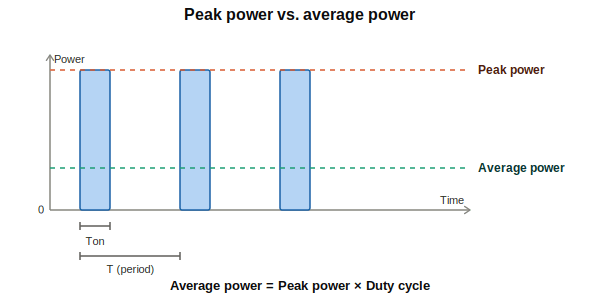
Modern communication systems increasingly use digital transmission methods that cause RF signal power to vary during operation. Unlike traditional constant-amplitude signals, these modern waveforms change in amplitude as information is transmitted, resulting in signals whose instantaneous power fluctuates over time.
While these advanced modulation schemes enable faster data transmission, more efficient spectrum use, and greater resilience against interference—all critical for secure military communications, high-capacity cellular networks, and next-generation broadcasting — they create a fundamental measurement problem for legacy equipment.
Traditional analog wattmeters were engineered for CW and FM signals, which maintain constant amplitude over time. These legacy instruments typically use point-contact diodes operated in the linear region of their I-V curve. The diode responds to signal voltage, and average power is computed based on a sampled voltage. For constant amplitude signals, this approach works well. But when measuring digitally modulated signals with varying amplitudes, analog wattmeters can overstate or understate power.
When RF signals exhibit complex or unpredictable amplitude variation, traditional analog wattmeters can produce significant power measurement errors. These errors lead to incorrect calibration, compliance risk, and unreliable system performance — making legacy wattmeters inadequate for many modern RF applications.
How the Bird 4480A Ensures Accurate RF Power Measurement for Modern Signals
The Bird 4480A Digital Wattmeter represents the next generation of Bird's thruline measurement legacy. It combines the robust quality and reliability you expect from Bird with cutting-edge detection technology designed specifically for today's complex RF environment.
At the heart of the 4480A is a Schottky diode detector operated in the square law region. Unlike point-contact diodes that respond linearly to voltage, Schottky diodes generate current proportional to V², which is instantaneous power. The 4480A Digital Wattmeter integrates this response over time to determine true average power, regardless of modulation complexity. Whether measuring CW signals or digitally modulated signals where average power is the quantity of interest, the 4480A delivers accurate average power readings you can trust.
This is not just a theoretical advantage. Comparative testing against thermal power standards, considered the gold standard for RF power measurement, demonstrates that the Bird 4480A maintains accuracy within ±4% across all supported modulation types, while traditional analog wattmeters can exhibit errors exceeding 100% on amplitude-modulated signals. See the technical paper, A Comparative Study of RF Power Meters for Digitally Modulated Signals in Military Applications.
The 4480A's advanced Schottky diode technology enables precise digital RF power measurement by correctly handling the varying amplitude characteristics inherent in modern communication signals. This ensures proper system calibration, regulatory compliance, and reliable operation across telecommunications, public safety, military communications, and aerospace applications. For more information on diode technology for RF power measurements, see the white paper, Accurate Error-Free RF Power Measurement in the Digital Era.
Advantages of Upgrading to a Digital Wattmeter
1. Superior Measurement Accuracy
The Bird 4480A Digital Wattmeter delivers industry-leading accuracy of ±4.0% of reading across its specified operating range. This precision enables reliable digital RF power measurement from 2 MHz to 1 GHz, reducing uncertainty and giving you confidence in your readings. Unlike analog wattmeters that struggle with amplitude-varying signals, the 4480A delivers accurate average power readings for both CW and supported digitally modulated signals in one device.
2. Element-Free Design
Traditional analog wattmeters require specific frequency band and power level elements that must be swapped based on your measurement needs. Each element represents another part to purchase, track, calibrate, and potentially lose. The 4480A eliminates this entirely with its element-free design. Simply select high band (25 MHz to 1 GHz) or low band (2 MHz to 30 MHz), and you're ready to measure — no element hunting, no installation delays, and no configuration headaches.
3. High-Power Handling
The Bird 4480A measures power from 1 watt to an impressive 10,000 watts on the low band, with high band coverage from 1 watt to 1,000 watts. This wide dynamic range means one instrument covers most RF power applications, from low-power testing to high-power transmission. This exceptional power handling capability makes the 4480A ideal for a wide range of RF power measurement applications across diverse operational environments.
4. Wider Frequency Coverage
While analog wattmeters rely on narrow-band elements that limit frequency coverage, the 4480A Digital Wattmeter spans 2 MHz to 1 GHz continuously within its two bands. This broad range makes it ideal for high-frequency applications, broadband testing, and multi-frequency systems where traditional wattmeters would require multiple elements. The extended frequency range ensures comprehensive digital RF power measurement capabilities for modern communication systems.
5. Reduced Calibration and Setup Time
Analog wattmeters and elements require frequent recalibration and element swaps when measurement parameters change. Each swap introduces potential errors and consumes valuable time. The 4480A's solid-state, element-free design eliminates these steps, providing quick and consistent measurements without frequent adjustments. You get reliable results immediately — no delays and no second-guessing. This streamlined workflow is essential when measuring digitally modulated signals in time-sensitive applications.
6. Improved Long-Term Reliability
Physical wear and tear on analog wattmeter elements degrades performance over time, affecting accuracy and requiring replacement. The Bird 4480A Digital Wattmeter's solid-state design ensures consistent performance over its lifetime and minimizes maintenance costs. With a recommended 12-month calibration interval, you maintain specified accuracy without the ongoing element replacement expenses.
7. Modern Features for Modern Workflows
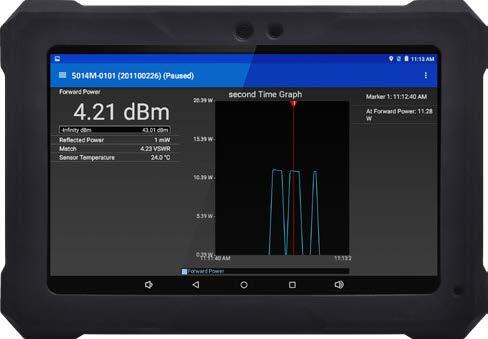
The 4480A includes built-in data transfer through a USB port, enabling easy integration into automated monitoring systems or documentation workflows. Its transflective LCD display with white LED backlighting ensures clear visibility in any lighting condition, while the intuitive three-button interface provides quick access to critical functions. The wattmeter displays forward power, reflected power, VSWR, and return loss simultaneously, giving you comprehensive transmission line analysis at a glance. These features streamline digital RF power measurement processes and enhance operational efficiency.
Applications Across Industries
The Bird 4480A Digital Wattmeter excels in environments where accuracy and reliability are essential:
- Telecommunications: Ensuring optimal performance in wireless systems, such as cellular infrastructure and private radio networks, where reliable average-power measurement is essential for performance and compliance.
- Broadcasting: Helping maintain signal integrity in radio and television transmission systems by providing accurate average RF power measurements for modern transmission formats.
- Military Communications: Supporting reliable operation of tactical and strategic RF systems where mission success depends on accurate power control.
- Aerospace & Defense: Providing dependable RF power measurements for complex communication and RF subsystems used in aerospace and defense environments.
Time to Upgrade?
If your RF systems have evolved to use digital modulation formats, your power measurement tools must evolve too. The Bird 4480A Digital Wattmeter combines Bird's legendary reliability with the accuracy and versatility modern RF environments demand.
Traditional analog wattmeters served the industry well for decades. But when digitally modulated signals entered the picture, the measurement paradigm changed. The 4480A represents Bird's answer to that change — preserving the thruline measurement approach you trust while delivering the true average power readings that complex modulations require. For RF power measurement, accuracy isn't just a specification — it's the foundation of system performance, regulatory compliance, and operational success.
Ready to experience the difference accurate RF power measurement can make?
Visit the 4480A Wattmeter page to learn more, or contact our RF experts to discuss how the 4480A fits your specific application.
Get practical RF insights delivered to your inbox.
Michelle Specht is the Senior Product Manager at Bird Technologies, where she drives strategy and innovation across the Test & Measurement product line. With a background in Aerospace Engineering, Michelle bridges technical performance with customer needs, ensuring Bird’s wattmeters and RF solutions deliver practical value for technicians, engineers, and system operators.
Explore Posts by Topic:
Products Featured:
Contact an RF Expert at Bird
Connect with a solutions expert for knowledgeable guidance.