
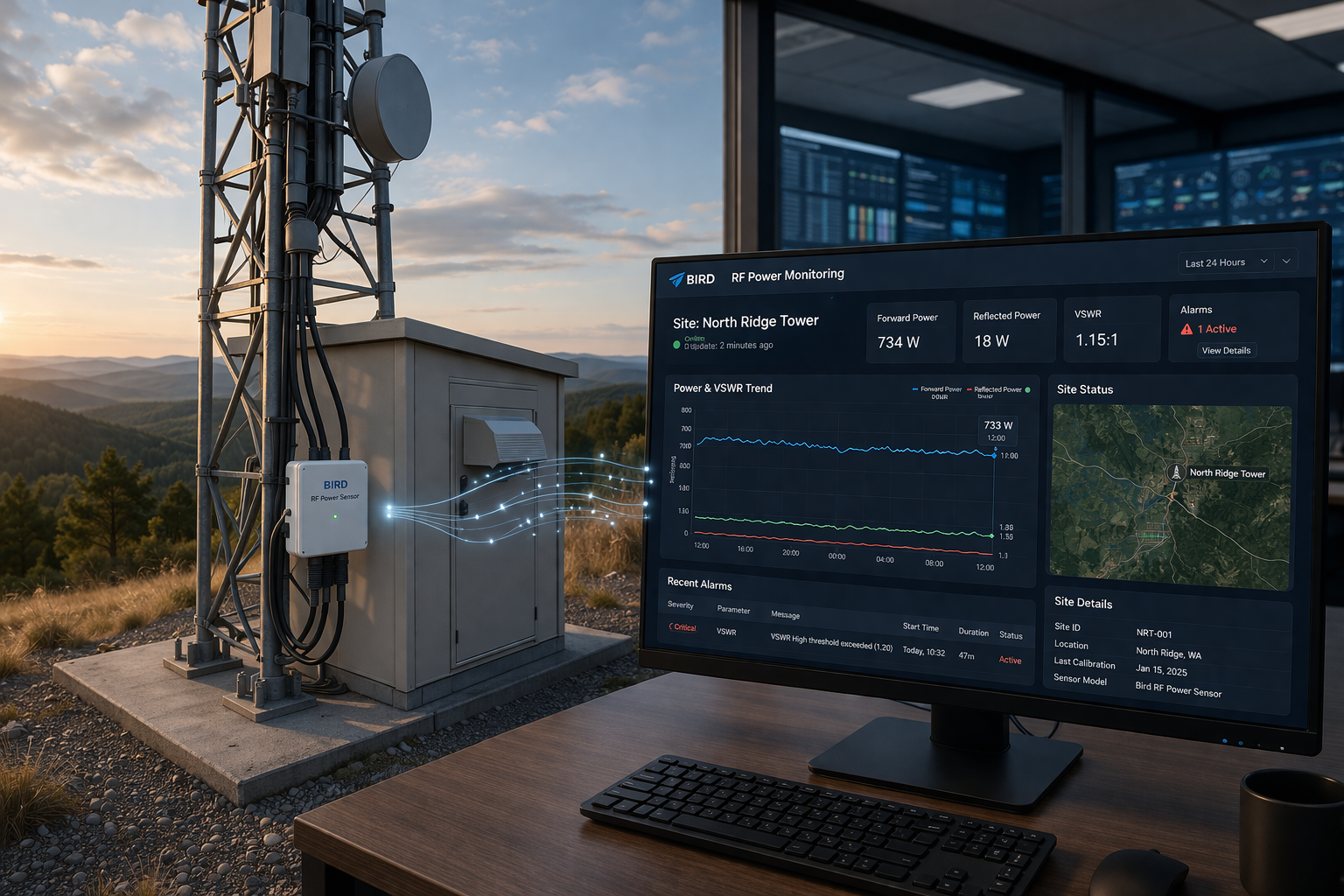
Continuous automated monitoring gives teams earlier visibility into RF performance changes, enabling proactive maintenance and reducing downtime.
Stop Flying Blind: Bring RF Visibility into Your NOC
Imagine flying an aircraft without key instruments. You may still be moving, but you have limited visibility into performance and little warning when conditions begin to change. Many RF systems are operated in a similar way today. Without continuous access to RF power data, teams often rely on periodic checks and delayed symptoms rather than early operational insight.
RF power monitoring gives network operations centers (NOCs) continuous visibility into system performance, helping teams detect issues before they impact coverage or reliability.
If you are not continuously monitoring the RF power in your communication system, you are flying blind. You have no way of knowing whether your transmitters are delivering expected power to the antenna, whether feedline losses are increasing, or whether receive-side performance is beginning to degrade until those changes start affecting coverage or system reliability. For public safety communications, failure at the wrong moment is not just an inconvenience. It can cost lives.
The good news: Continuous RF monitoring is more accessible than many teams assume. With the right sensing approach, RF power data can be integrated into existing network operations workflows to support earlier visibility and more proactive maintenance.
How Communication Systems Degrade
RF communication systems rarely experience sudden, dramatic failures. Instead, they degrade gradually. Equipment drifts, and characteristics change due to weather and ageing. Over time, communication systems experience increased losses, reduced transmitter output, and degraded receiver sensitivity.
Increased Losses
Coaxial cables, connectors, isolators, and combiners all introduce loss into the RF path, and that loss can increase over time. Cables age, connectors corrode, and impedance match can shift as components are exposed to weather, vibration, and mechanical stress. Moisture ingress through a compromised weather seal can further accelerate degradation by oxidizing conductors and increasing insertion loss. These losses can reduce system margin, with performance issues often appearing first at the edge of the coverage area.
Reduced Transmitter Power Output
Transmitters age. Power amplifier stages drift. A transmitter's front-panel meter may show the expected output at the transmitter itself, but that does not confirm how much power is actually reaching the antenna.
Degraded Receive-Side Performance
A corroded or damaged receive antenna can increase return loss and reduce the signal captured from the air. As receive-path performance degrades, the system has less margin for weak signals and may become more susceptible to interference. Portable radios that once accessed the system reliably may begin to experience reduced range, inconsistent performance, or missed communications.
The Hidden Cost of Manual RF Inspections
Most organizations still rely on scheduled truck rolls to assess RF health. Some truck rolls are unnecessary, and resources are spent inspecting sites that are operating within specification. Other site visits begin without enough visibility to identify the real source of the problem. That can mean dispatching the wrong technician, bringing the wrong tools, or troubleshooting the wrong part of the system. Each unnecessary truck roll adds cost, and each misdirected visit delays resolution while the underlying issue continues to develop.
Continuous In-Line RF Power Monitoring: The Solution
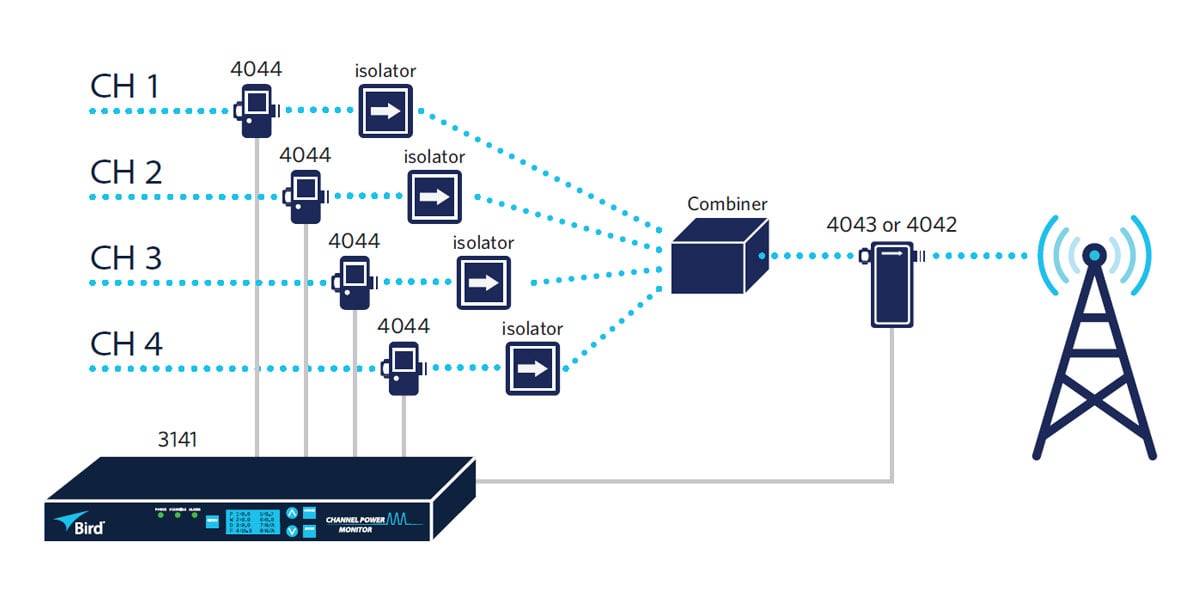
Integrating in-line RF power sensors into network operations workflow helps close the visibility gap between periodic inspections and real-time system awareness. These sensors install directly in the RF path — between the transmitter and the combiner, between the combiner and the antenna, or on the receive feedline.
These sensors provide continuous measurement data that can be brought into the NOC for ongoing monitoring and faster operational response. Automated measurement of RF health data gives network operations teams earlier visibility into system degradation as it develops. Trending data can reveal gradual changes over time, while alarms can notify the NOC when defined thresholds or conditions are met. This allows teams to respond sooner to emerging issues that might otherwise go unnoticed until a scheduled inspection or a larger performance problem occurs.
Transmit Path Monitoring
A directional sensor installed in the transmit path can measure forward power, reflected power, and VSWR continuously. Changes in VSWR can provide early indication of antenna or feedline deterioration before it begins to affect coverage. A decline in forward power flags transmitter output problems while the transmitter is still functional — giving teams more time to schedule maintenance, order parts, and dispatch a qualified technician with the right equipment.
Receive Path Monitoring
Monitoring only the transmit path gives you half the picture. Receive-path integrity matters just as much, especially in networks where weak-signal performance is critical. A receive antenna monitor measures return loss across the antenna's operating frequency range, providing continuous visibility into receive path health. Degradation that would otherwise go undetected until subscriber complaints surface can show up as a trend in your NOC giving teams earlier insight and more time to respond.
Integrating RF Monitoring into Your NOC
RF power data becomes more valuable when it is brought into the systems the NOC already uses to monitor network health. Sensors with a standard network interface will connect directly to your private IP network and display measurements via a web interface or the SNMP protocol. Thresholds and alarm conditions can be configured around expected system behavior, and the sensors continuously monitor against those parameters. When performance moves outside defined limits, the resulting measurement and alarm data can be delivered into existing NOC workflows. That gives operations teams earlier visibility into abnormal RF conditions without requiring a separate monitoring environment.
Bird Ethernet RF Sensors: Built for NOC Integration
Bird’s Ethernet RF sensor family is one practical example of how transmit- and receive-path monitoring can be integrated into existing network operations workflows.
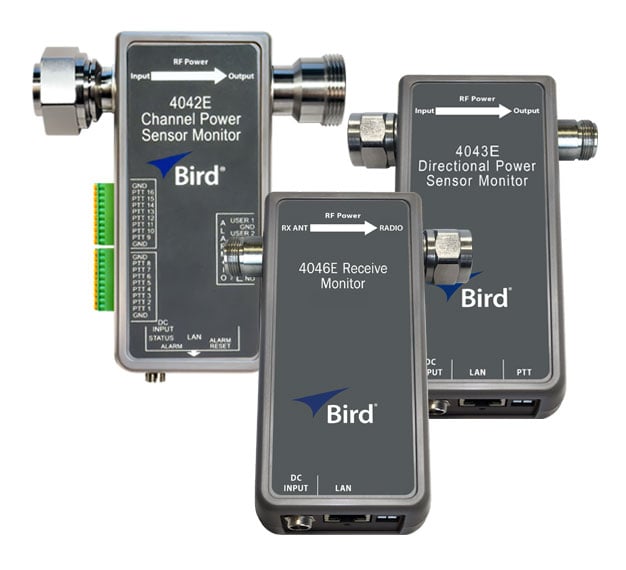
- The 4043E Directional Ethernet RF Sensor supports composite transmit monitoring by measuring forward power, reflected power, and VSWR. With configurable thresholds and alarms, it helps operators identify developing transmit-path issues such as increasing loss, worsening match, or signs of antenna, feedline, or component deterioration. The 4043E is available in eight frequency bands.
- The 4042E Channelized Ethernet RF Sensor is designed for multi-carrier systems, providing measurements of individual channel power, composite power, and VSWR. These measurements help operators track channelized transmit performance and identify changes that may indicate insertion loss, combiner drift, or antenna and feedline issues. The 4042E can monitor up to 16 transmitters.
- The 4046E Receive Path Ethernet RF Sensor monitors the health of the receive path by performing scheduled return loss measurements on the feedline to the antenna. The 4046E also detects RF interference with a received signal strength indicator (RSSI) measurement during periods of communication inactivity. Both return loss and RSSI are measured over a specified frequency band.
All three sensors connect to the IP network and make measurement data available through a browser-based web interface or via SNMP. This allows measurements, alarms, and timestamps to be integrated into the NOC system and workflows already in place.
Stop Reacting and Start Predicting
RF communication systems do not remain static. Degradation develops over time in cables, connectors, amplifiers, and antennas. The only question is whether you identify the problem early or after it has already affected coverage, reliability, or critical communications.
Bringing RF power data into network operations workflows gives the NOC earlier visibility into developing RF issues. That helps operations teams identify trends sooner, respond with better information, and support more effective maintenance and field response before problems grow into larger service issues. Bird's Ethernet RF sensor family makes that integration straightforward and cost-effective.
Related RF Monitoring Resources
-
Ensure Reliability of Mission-Critical Communication Networks
Learn how continuous monitoring improves system reliability and helps prevent failures in critical communication environments. - Is Your RF System Telling You Something Before It Fails?
Discover how early warning signs in RF performance can reveal developing issues—before they impact coverage or uptime. - Explore Ethernet RF Sensors for Remote Monitoring
See how Bird’s Ethernet RF sensors provide continuous transmit- and receive-path visibility for modern network operations.
Design a Smarter RF Monitoring Strategy
Contact us to discuss designing a continuous RF power monitoring solution for your system — and stop flying blind.
Contact an RF Expert at Bird
Connect with a solutions expert for knowledgeable guidance.