

Keeping a remote RF site on the air is not just about responding when something fails. It is about recognizing when performance starts to change before the problem becomes obvious.
Most RF Systems Do Not Fail All At Once.
Most RF systems do not fail suddenly. Performance usually changes gradually over time.
- Transmitter output starts to drift
- Losses increase somewhere in the RF path
- Reflected power starts to change
- Antenna or feedline performance begins to shift
- One channel starts behaving differently than the rest
By the time those changes are obvious during a site visit, they may already be affecting coverage, reliability, or overall system performance.

Ask Yourself: How Much Visibility Do You Really Have?
- Do you really know how your RF system is performing between maintenance visits?
- Would you know if one transmitter started trending differently than the others?
- Could you tell the difference between a transmitter issue and an antenna-path issue without visiting the site?
- Are you reacting to alarms and failures, or catching degradation early?
- How many times do you send someone out before knowing where the problem actually is?
For many operators, that is the challenge. The site may still be on the air, but that does not always mean it is healthy.
In Complex RF Systems, Small Changes Matter
Whether you support public safety radio, utility communications, transportation networks, or other fixed RF infrastructure, system performance depends on more than one device.
You may be dealing with:
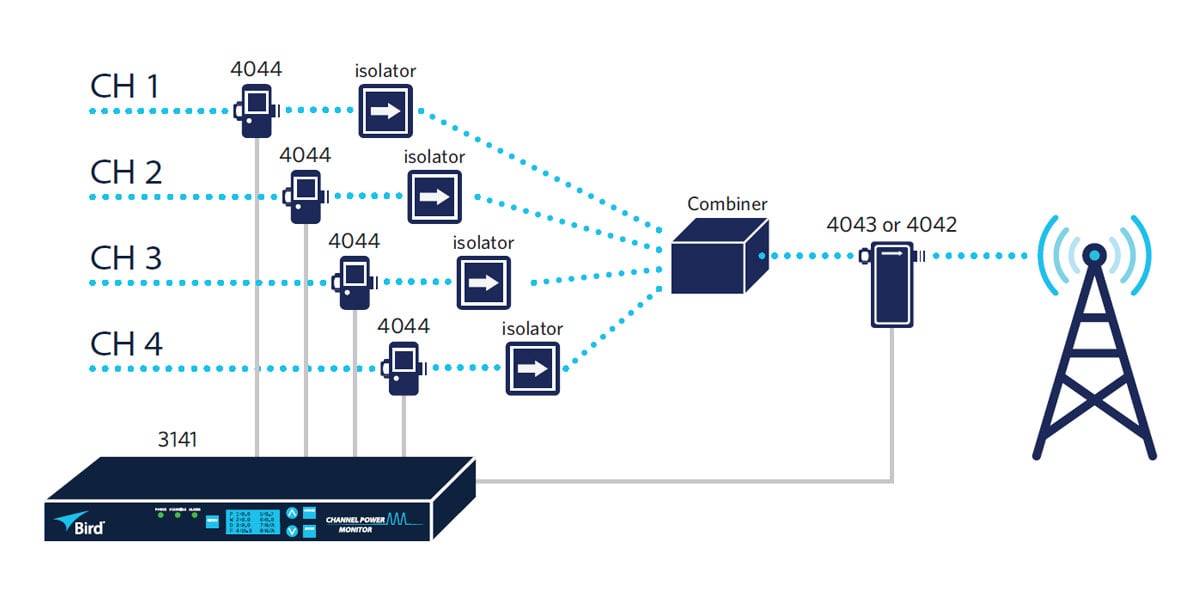
- Multiple transmitters
- Shared RF paths
- Combiners and cavities
- Isolators
- Feedlines
- Antenna systems
- Remote or hard-to-access sites
A single measurement at one point in the system rarely tells the whole story.
That raises an important question: Are you seeing the full RF picture, or just one piece of it?
The Limits of Periodic Testing
If you are relying mostly on periodic site visits or isolated measurements, you may only be seeing snapshots of system health. A site can still appear operational while performance is slowly changing in ways that are easy to miss until the problem becomes more serious.
How Remote RF Monitoring Improves System Visibility
Remote RF monitoring helps fill the visibility gap between site visits.
With better visibility between site visits, teams can
-
Spot trends earlier
-
Compare performance across different points in the system
-
Approach troubleshooting with more context before rolling a truck
Remote monitoring does not replace field testing, but it can help reduce guesswork and improve response when something starts to change.
Why Early Visibility Matters
For operators managing critical RF infrastructure, system health is too important to leave to periodic checks alone.
The sooner you can see a shift in performance:
-
The sooner you can investigate
-
The easier it becomes to prioritize action
-
The more likely you are to prevent minors issue from becoming a service-impacting problem.
The goal is not simply to respond to failures, but to understand system health before problems escalate.
Related Resources
You may also want to explore:
- Learn about the different approaches to Remote RF Monitoring
- Explore Ethernet RF Monitoring Sensors
- Read the application note: Monitoring Complex LMR Systems
See What Your RF System Is Really Doing
Remote RF monitoring helps teams detect changes earlier and troubleshoot RF systems with better context.
Request a Site Recommendation →
Contact an RF Expert at Bird
Connect with a solutions expert for knowledgeable guidance.