
Semiconductor Plasma Processing RF Power Measurement Fundamentals
May 1st, 2026
4 min. read | By Nik Azim
Topics:
The measurements needed for precision control of plasma processes.
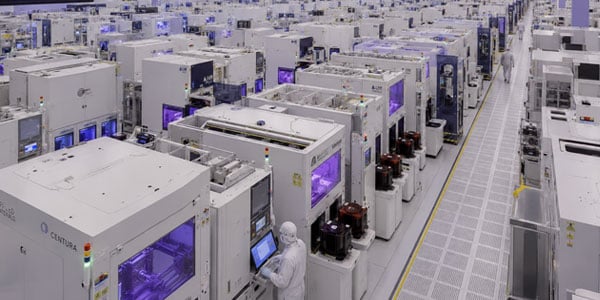
Plasma processing is at the heart of modern semiconductor manufacturing. Engineers rely on plasma-enhanced deposition and etching processes to build and sculpt the nanoscale structures that define modern integrated circuits, where tight process control is essential to achieving consistent device performance and yield.
RF energy energizes gases in a vacuum chamber, creating plasma, a mixture of ions, electrons, and radicals. The reactive elements diffuse through the plasma, forming thin layers of material on the wafer surface with atomic-level precision. In etching, reactive radicals remove material while accelerated ions provide directionality, enabling the precise pattern transfer that defines device dimensions.
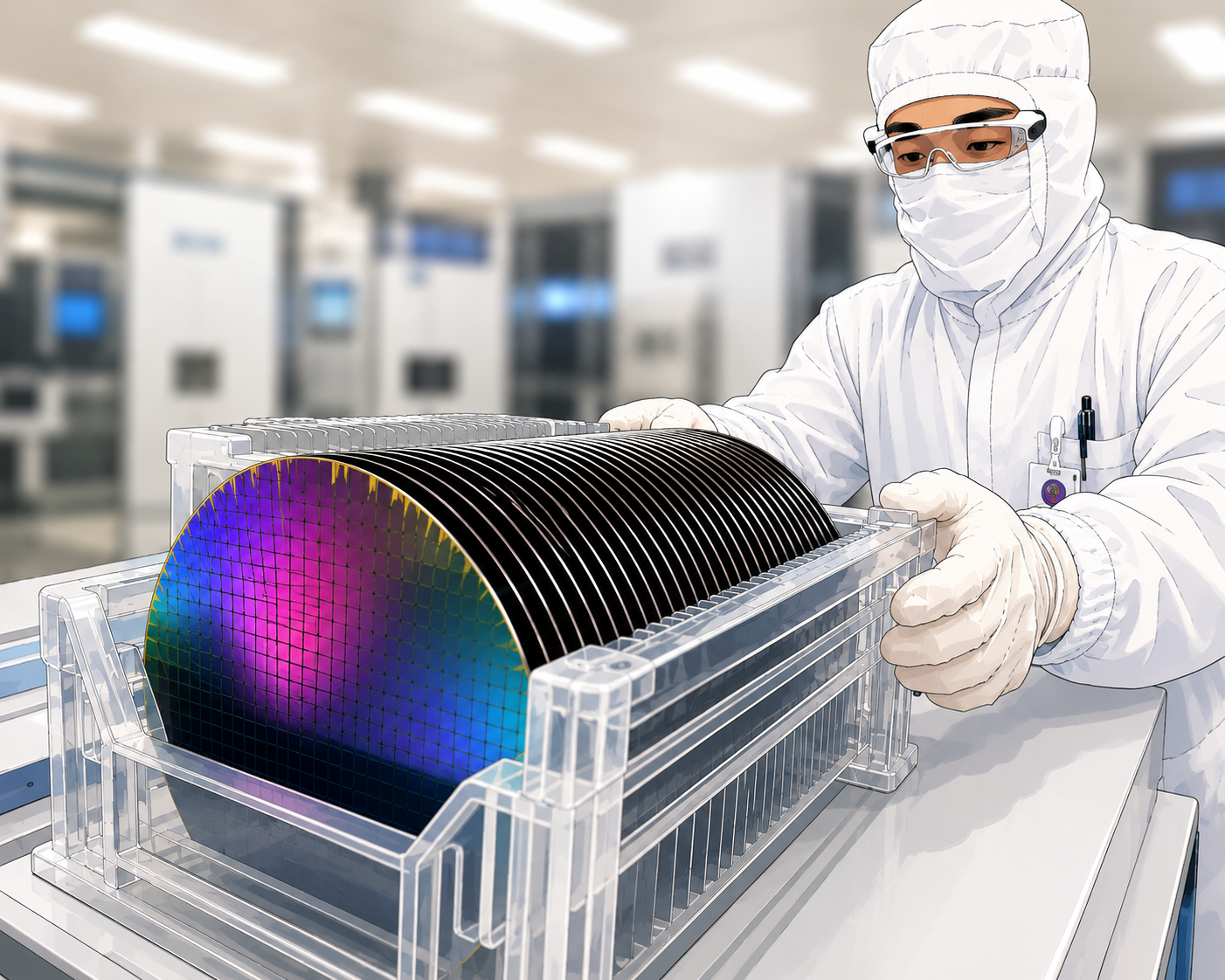
Both processes require precise control of the RF energy that drives the plasma. Even small deviations in delivered power, impedance, or harmonic content can shift etch rates or deposition uniformity enough to push critical dimensions out of specification, turning potentially good die into scrap. Inadequate monitoring compounds the risk. Without accurate, real-time data, engineers cannot detect process drift before it degrades yield, costs production time, and increases the expense of rework or wafer loss.
Effective process control begins with measuring the parameters that influence the process. Measuring RF power at critical points along the delivery path provides greater visibility into the factors that impact plasma process performance.
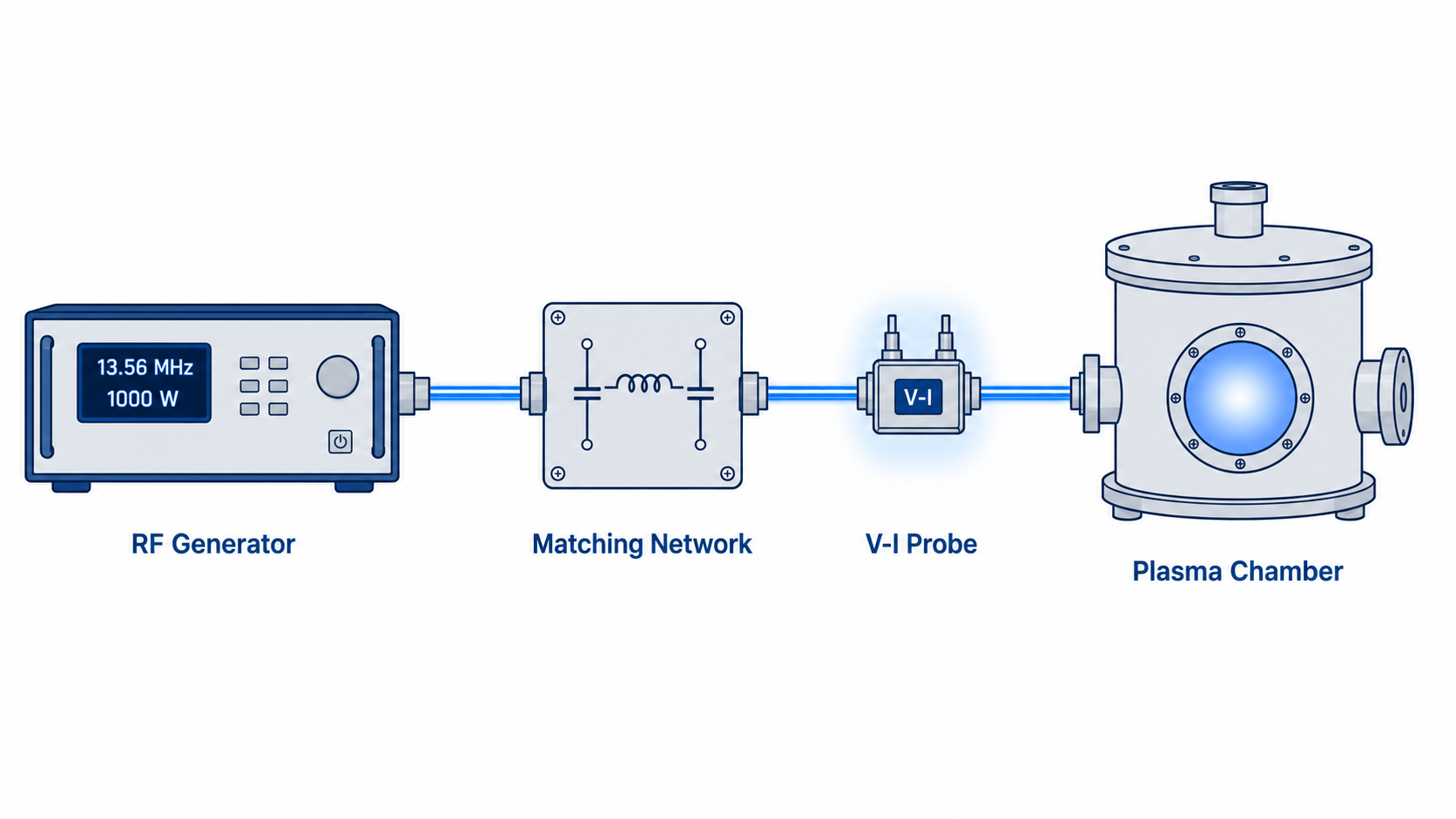
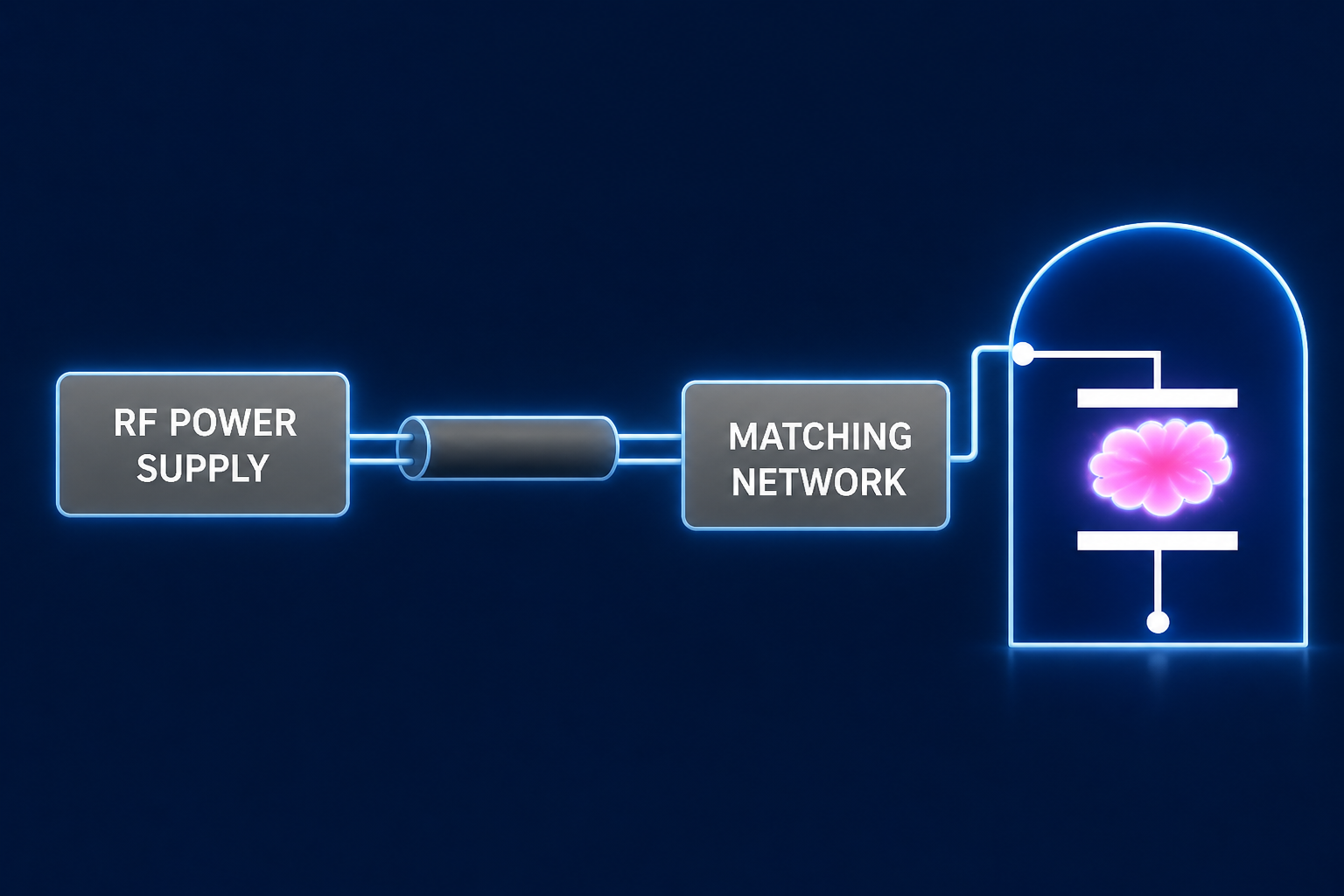
The RF delivery path from generator to plasma chamber divides into two distinct environments. and the measurement techniques that work well in one are inadequate in the other. Understanding what to measure in each section of the RF delivery path, and why, is the foundation of effective plasma process monitoring and control.
Ensuring Power Delivery to the Match Network
Between the RF generator and the impedance matching network, the transmission line operates in a nominally 50-ohm environment controlled by the matching network. In this reasonably well-behaved section, directional coupler-based in-line power sensors can accurately separate and measure the forward-traveling wave from the reflected wave. The forward power reading tells the engineer how much RF energy the generator delivers to the matching network, and the reflected power reveals how well the matching network maintains the 50-ohm system impedance seen by the generator.
The Importance of Accurate Forward and Reflected Power Measurements in the Pre-Match Section
The greater the accuracy of the power measurements, the more confidence process engineers can have in verifying that the power needed for the process is delivered to the match network. High-accuracy measurement enables RF Generator setpoint calibrations to be performed that minimize tool-to-tool variations across fabrication facilities (fabs).
Characterizing the Plasma after the Match Network
Limitations of Forward/Reflected Power Measurements in the Pre-Match Section
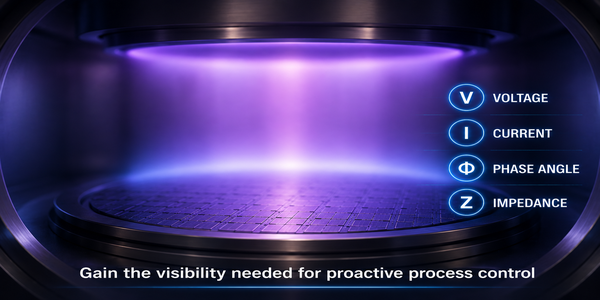
Forward and reflected power measurements are essential for stable 50-ohm transmission lines, but they become inadequate in the dynamic, complex impedance environment beyond the matching network. In this region, the plasma load continuously changes, and the assumptions underlying forward/reflected power measurements no longer hold. As a result, power measurements offer limited insight into the changes occurring within the process chamber during recipe steps. Measuring voltage, current, and phase at the chamber input provides a clearer view of power delivery and impedance, enabling engineers to observe plasma behavior in real time, detect process variations, and achieve tighter control over process performance.
Why Plasma Is a Complex Impedance, Not a Fixed 50-Ohm Impedance
Beyond the matching network, the plasma chamber is an electrically hostile environment from a measurement standpoint. The plasma load is not a resistive 50-ohm termination. It is a dynamic, nonlinear impedance that varies continuously with process conditions. Chamber pressure, gas chemistry, RF power level, and wafer loading all influence the impedance the plasma presents to the RF delivery system. Because the impedance is complex and constantly changing, power cannot be derived solely from voltage or current measurements. Engineers must measure voltage, current, and the phase angle between them simultaneously to calculate true delivered power (P = V × I × cos θ), the impedance at the fundamental frequency, and at harmonic frequencies.
What Impedance Can Indicate in Process Monitoring
Tracking impedance in the post-match section gives engineers a direct window into plasma conditions. Shifts in the resistive component of impedance can indicate changes in plasma density or electron temperature. Changes in the reactive component signal shifts in sheath thickness or plasma chemistry. When engineers track impedance trends over time, they can identify process drift or arcing before it results in the production of poor-quality or defective wafers. Impedance data also allows chamber-to-chamber characterization, enabling fabs to qualify multiple tools for a specific process.
Why Harmonics Are an Important Measurement in Plasma Processing
Plasma is a highly nonlinear load. The plasma sheath, which forms at the boundary between the plasma and chamber surfaces, rectifies the RF voltage and generates harmonic frequencies, integer multiples of the fundamental drive frequency. These harmonics are not simply wasted energy; they actively participate in ion bombardment dynamics and influence etch directionality, selectivity, and film quality.
Monitoring harmonic amplitudes and phases at the post-match measurement point gives engineers insight into plasma nonlinearity that forward/reflected power measurements cannot provide. Changes in harmonic levels can serve as early indicators of process drift or equipment anomalies before they become visible in conventional power readings.
Conclusion: Measure Both Inside and Outside the Chamber to Fully Monitor and Control Plasma Processing
Effective plasma process monitoring requires a two-pronged measurement strategy. Outside the chamber, up to the impedance-matching network, high-accuracy forward and reflected RF power measurements provide engineers with visibility into generator output and matching network performance. These measurements verify that the RF delivery system is operating within specification and provide the power-side data needed for process qualification and tool-to-tool matching.
Inside the chamber, in the post-match section between the matching network and the plasma, voltage, current, phase angle, and the resulting delivered power and impedance calculations provide the deeper process insight that power measurements alone cannot deliver. Adding harmonic analysis gives engineers a sensitive, early-warning indicator of plasma nonlinearity and process drift.
Together, pre-match power measurements and post-match V, I, phase, and harmonic measurements form a complete picture of the RF power delivery and the plasma process it sustains. Neither measurement zone alone is sufficient; both are necessary for the level of process control that modern semiconductor manufacturing demands.
Bird's semiconductor RF measurement solutions for semiconductor plasma processing deliver the accuracy, traceability, and measurement range that fabs need, from high-power precision sensors for pre-match monitoring to inline voltage-current-phase measurement systems for post-match analysis. Contact the Bird semiconductor processing experts to learn how the right measurement strategy can improve your process control and drive higher yields across your fab operations.
Nik is a Product Manager at Bird, focusing on our Precision RF Power Sensor and Precision V-I-Φ Measurement product offerings. These solutions encompass Bird’s most advanced and accurate measurement devices and are utilized in semiconductor fabs and foundries worldwide.
Explore Posts by Topic:
Products Featured:
50 Ohm Inline Sensors
Monitor RF power continuously without interrupting the signal path
Contact an RF Expert at Bird
Connect with a solutions expert for knowledgeable guidance.