
Ensuring precision semiconductor processing for high yield.
RF power, voltage, and current measurements are only as valuable as the confidence engineers can place in them. That confidence depends on a rigorous calibration program anchored to internationally recognized measurement standards.
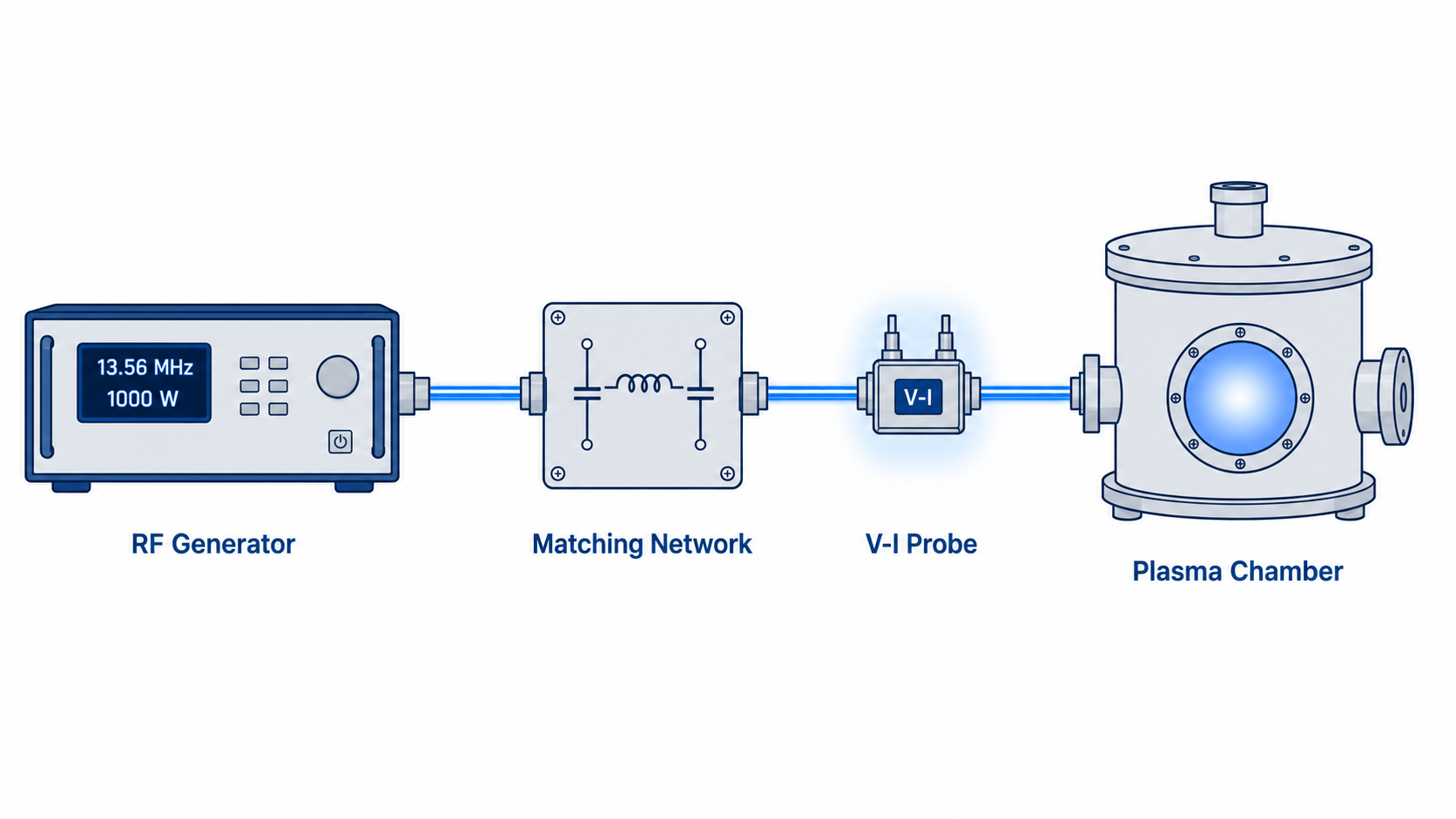
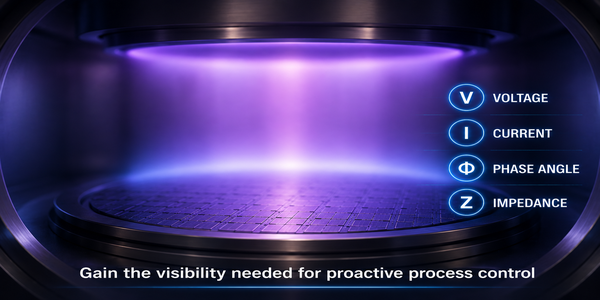
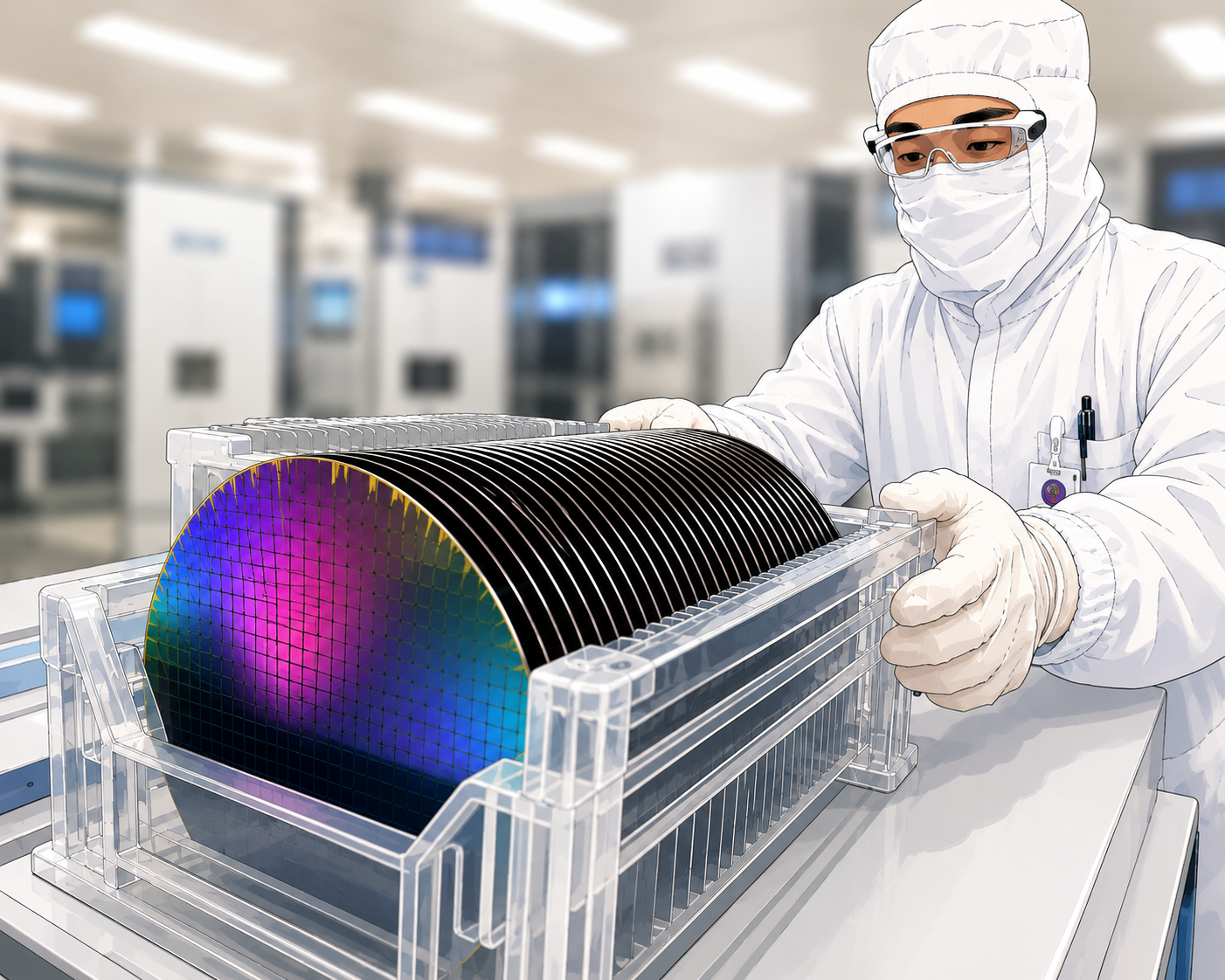
Plasma processes in semiconductor fabrication operate within narrow RF power windows. Even small calibration offsets in RF instrumentation can shift process results in ways that are difficult to diagnose. Incorrect delivered power or impedance measurements directly affect etch depth, deposition uniformity, and feature profile, eroding wafer yield.
As technology nodes shrink, process specifications tighten. The monitoring RF power measurement instruments must have improved accuracy to maintain process requirements. Accurate RF power measurements provide process and equipment engineers a reliable baseline, confirming that the readings reflect physical process conditions, not instrument variability.
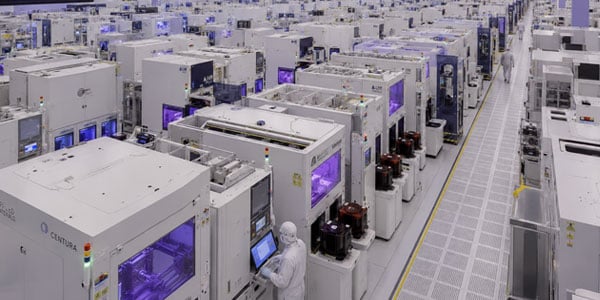
High-volume fabs have numerous plasma etch and CVD tools. If any of the RF generators in the tools drift out of specification, process excursions follow. Accurate, traceable calibration is the engineering discipline that keeps those generators and the monitoring equipment within specification, protecting throughput and yield.
Traceability to a National Standard
Ensuring consistent performance among RF instruments requires that both power-generating and power-measuring instruments be calibrated and that the calibration be referenced to an accepted standard. That requires traceability.
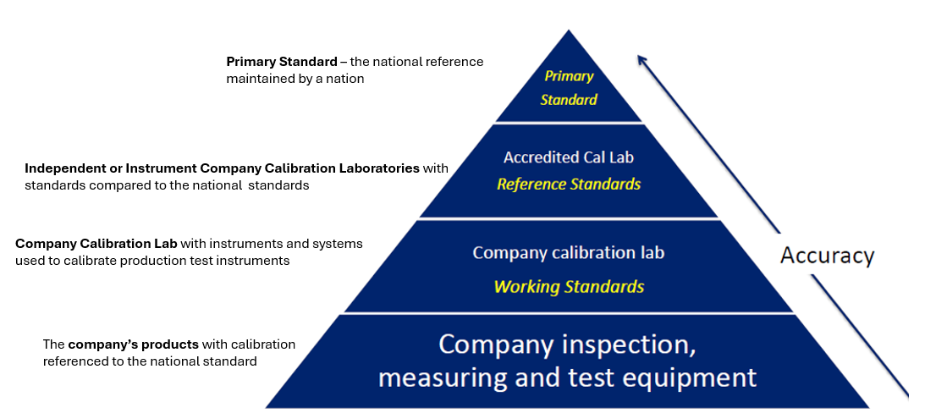
Traceability means that a measurement instrument's calibration links through an unbroken chain of comparisons to a national primary measurement standard. In the U.S., the National Institute of Standards and Technology (NIST) maintains those primary standards. Each step in the chain uses a reference standard with a known, documented uncertainty relative to the step above, all the way back to NIST. The diagram below illustrates this traceability hierarchy:
Traceability hierarchy to a national standard
When an RF power sensor carries NIST-traceable calibration, its accuracy specification is not a hollow claim. It is an auditable statement of measurement uncertainty backed by internationally recognized science. For semiconductor fabs operating under ISO or SEMI quality management frameworks, NIST traceability is often a prerequisite for process qualification and regulatory compliance.
Defining and Maintaining Device Accuracy
Every RF power sensor and instrument ships with a specified accuracy valid for a defined time interval. That specification is the result of a formal accuracy budget: an engineering analysis that allocates allowable measurement uncertainty across every contributing error source, including mismatch, linearity, temperature coefficient, and component aging. The analysis defines the percentage error the sensor can maintain over a specific time period. The time period determines the recommended calibration interval for the device.
Keeping sensors and other devices calibrated ensures they deliver equivalent measurement performance, even when they are procured or recalibrated at different times. This consistency is what allows a fab to trust that two sensors monitoring the same generator will provide identical measurements within their specifications, regardless of when each was last calibrated.
Consistent Performance Across Tools and Facilities
Large semiconductor manufacturers operate multiple fabrication facilities, sometimes across different countries. Process consistency across all the fabs requires that RF measurement equipment produce identical results regardless of location. NIST-traceable calibration provides a common reference that enables cross-fab comparability.
When every sensor in all the fabs traces its calibration to the national standard, process engineers can compare data from a fab in one region to a fab in another with confidence. Measurement differences then reflect true process differences, not instrument-to-instrument variation. Furthermore, equipment qualification and tool-matching studies become meaningful only when the measurement reference is consistent.
Bird’s Expertise in High-Power RF Calibration
Bird Technologies has served the semiconductor processing industry for decades, developing specialized expertise in NIST-traceable, high-accuracy RF power measurement. Central to this expertise is Bird’s advanced calorimetry technology.
Calorimetry measures RF power by precisely quantifying the heat it generates in a metrology-grade, low-reflection load. Bird has developed an innovative calorimetric system, establishing a high-power traceability path far above the milliwatt levels used by conventional calibration labs. Bird's calorimetric system achieves less than 0.2 % measurement uncertainty to support the specifications of our 0.5% sensors. Crucially, a robust traceability chain requires the calibration standard to be more accurate than the device under test, ensuring confidence in every measurement passed down the chain. This high-power working standard enables Bird to supply the semiconductor industry with:
- The 7037 and 7039 Series RF power sensors with ±0.5% accuracy
- RF generator calibration carts that bring traceable calibration directly to the tool in the cleanroom
Calibration as a Yield Enabler
Accurate, NIST-traceable RF power calibration is a direct enabler of high-yield plasma processing. Calibrated sensors and measurement equipment give process engineers a reliable measurement baseline, support tight power control in etch and deposition steps, and ensure tool-to-tool and fab-to-fab consistency. Together, these capabilities protect yield, reduce process excursions, and support the continuous improvement that advanced semiconductor manufacturing demands.
Learn more about RF Power Measurement Solutions for Semiconductor Processing or contact our semiconductor processing experts to learn how our NIST-traceable, high-accuracy RF power sensors and calibration carts can increase your processing yield.
Contact an RF Expert at Bird
Connect with a solutions expert for knowledgeable guidance.