
Search for topics or resources
Enter your search below and hit enter or click the search icon.

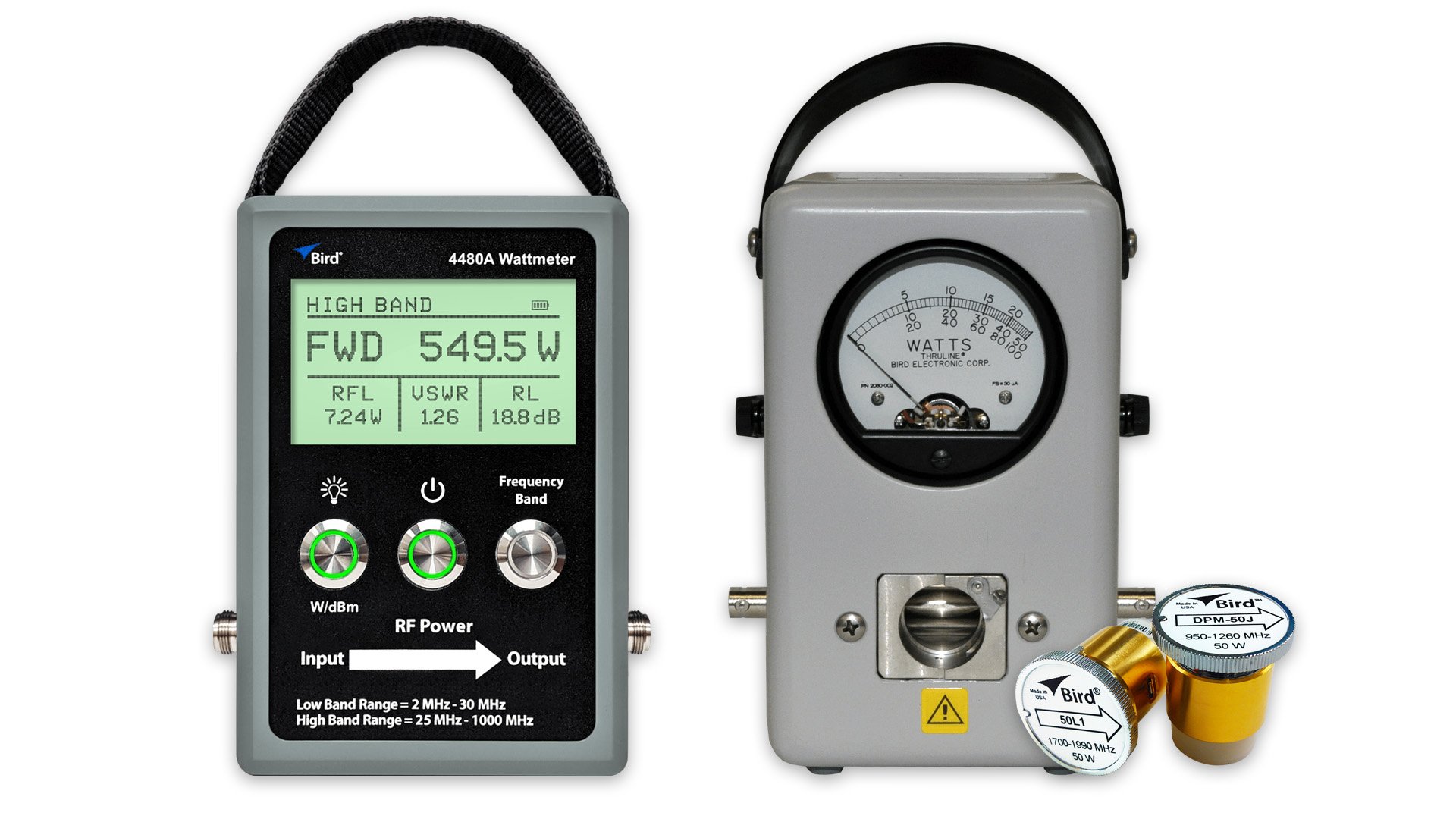

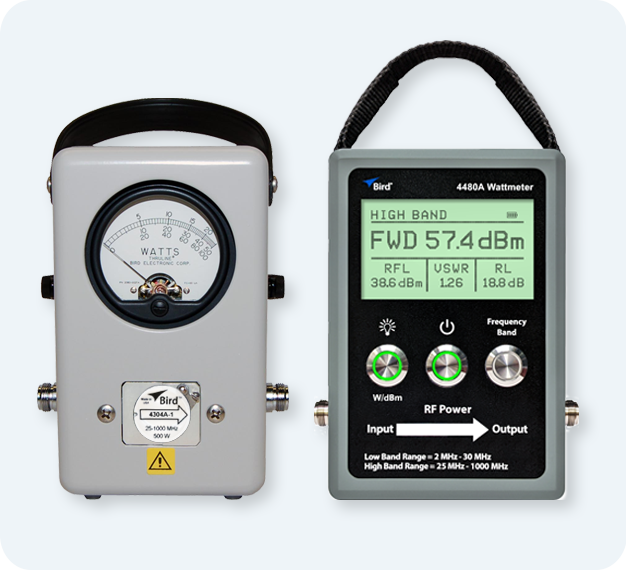
The Bird 43 defined RF power measurement for generations of radio technicians.
The Bird 4480A brings that same measurement philosophy to modern digitally modulated radio systems.
The Bird Model 43 remains one of the most recognized RF wattmeters ever built and continues to serve as a reliable tool for traditional RF power measurements.
However, many modern public safety, utility, land mobile radio, military, and commercial radio systems now rely on digitally modulated signals that require additional measurement capabilities.
The Bird Model 4480A extends the trusted Thruline® measurement method into these modern environments by providing true average power measurements, VSWR, return loss, and element-free operation.
The table below compares the Model 43 and 4480A to help technicians select the right instrument for their measurement needs.
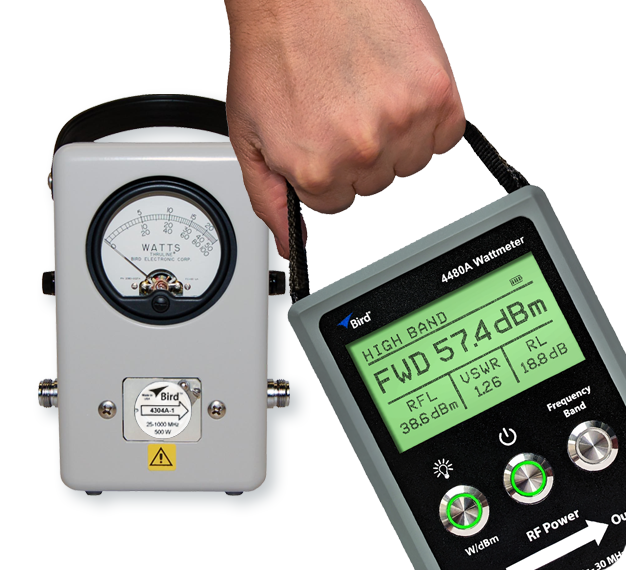
The Bird Model 43 wattmeter requires users to select the correct element and interpret the appropriate analog scale with the readings only in Watts.
The 4480A displays power readings directly on a digital screen and provides consistent measurement accuracy without manual scale calculations. The power readings are configurable between Watts and dBm.
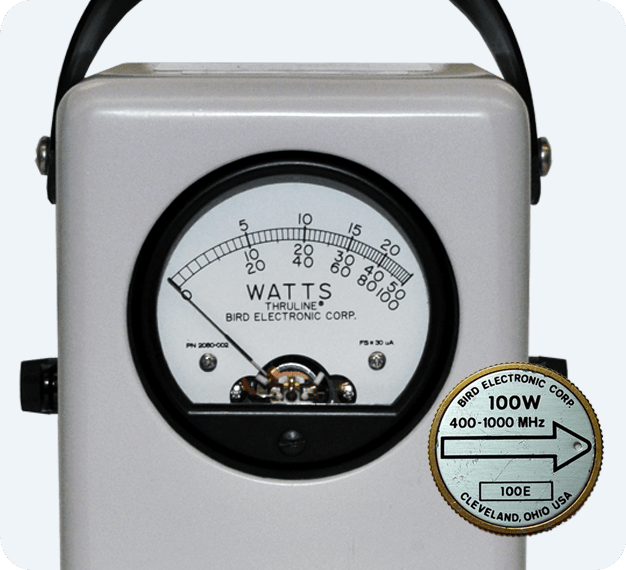
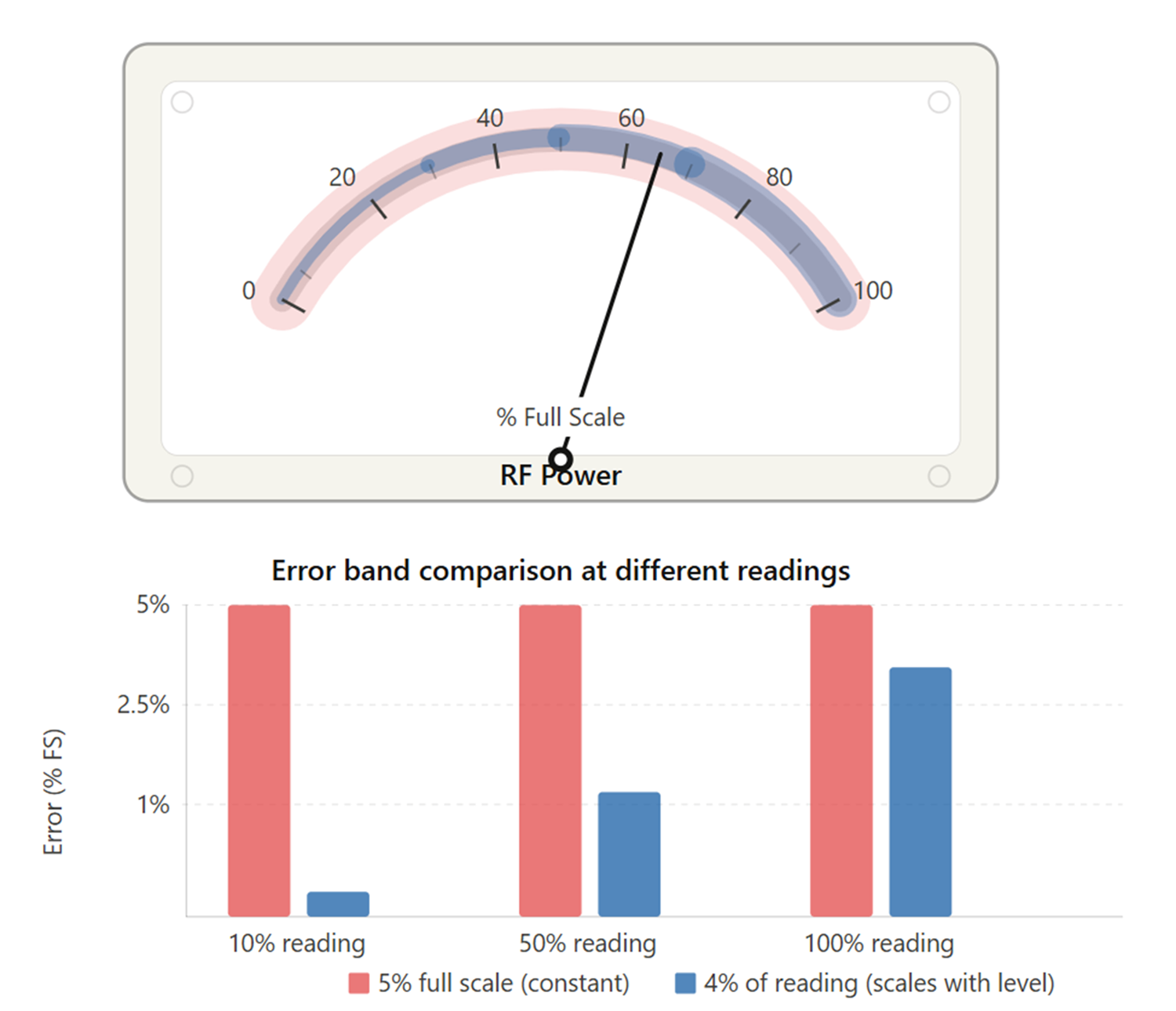
The Bird 43 specifies accuracy as ±5% of full scale, meaning the potential measurement error is based on the maximum value of the selected element—not the power level being measured. As a result, measurements taken near the lower end of a scale can have a larger percentage error relative to the actual reading.
The 4480A specifies accuracy as ±4% of reading, meaning the accuracy is tied directly to the measured value. This provides more consistent measurement confidence across the instrument's operating range and eliminates the need to interpret analog scales or perform manual calculations.
For technicians, the difference is simple: the 4480A delivers direct digital readings with accuracy based on what is actually being measured, helping reduce uncertainty when evaluating transmitter performance, troubleshooting systems, or documenting test results.

The Bird 43 remains one of the most trusted RF wattmeters ever produced.
Bird recommends the 4480A Digital Wattmeter for modern digital radio systems such as P25, DMR, and NXDN because it accurately measures true average power on digitally modulated signals.
The Bird 43 uses interchangeable elements (slugs) and multiple analog scales to cover different frequency and power ranges. Users must select the correct element and interpret the corresponding scale.
The 4480A simplifies this process with a digital display that directly shows measured values without requiring scale conversions.
The Bird 43 specifies accuracy as ±5% of full scale and uses an analog meter that requires the user to select and read the appropriate scale.
The 4480A uses a digital display and specifies accuracy as ±4% of reading, providing consistent accuracy across its operating range and eliminating scale interpretation errors.
For digitally modulated systems such as P25, DMR, NXDN, and TETRA, Bird recommends the 4480A Digital Wattmeter as the modern evolution of the Thruline® wattmeter platform.
Yes. The Bird 4480A measures forward power and reflected power and automatically calculates VSWR and return loss. These measurements help technicians identify antenna, transmission line, and system matching issues without requiring additional test equipment.
Both the Model 43 and 4480A are used in LMR maintenance. The 43 remains a trusted standard, while the 4480A adds capabilities optimized for modern digital radio systems.
Bird's Model 43 remains the industry standard for analog RF power measurement, while the 4480A provides digital measurement accuracy, direct-read power values, and support for modern communications systems.