From quick scans to deep dives, Bird’s RF analysis tools give you the insights you need to get the job done whether you're on the bench, in the field, or on the manufacturing floor.
An RF analyzer helps technicians and engineers test and troubleshoot radio frequency systems. The right analyzer depends on what needs to be measured. A cable and antenna analyzer evaluates antennas, feedlines and cable faults, while a spectrum analyzer displays and measures RF signals, including interference.
A cable and antenna analyzer tests the RF transmission path, including the cable, connectors and antenna. It measures antenna match, cable loss and distance to fault. A spectrum analyzer displays RF power across a range of frequencies and is used to identify signals, measure signal characteristics and investigate interference.
For example, a technician might use a cable and antenna analyzer to locate a damaged connector and a spectrum analyzer to identify an unwanted signal affecting the system.
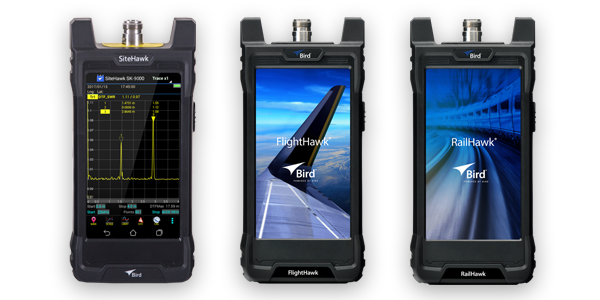
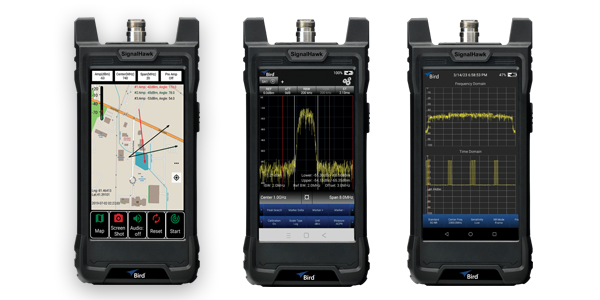
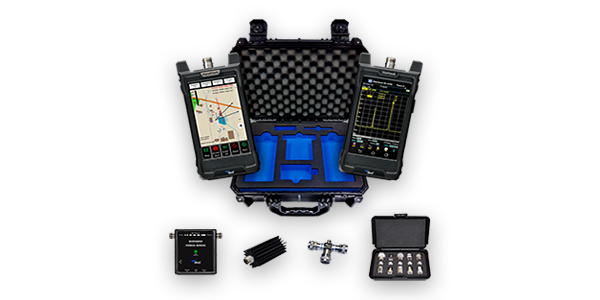
Choose a SiteHawk cable and antenna analyzer when you need to test an antenna, feedline or cable. Choose a SignalHawk spectrum analyzer when you need to view RF activity, measure signals or investigate interference. Then select a model that covers the required frequency range and measurements. If you need both types of analysis, Bird RF Analyzer Kits combine analyzers, sensors and accessories in a field-ready case.
Yes. A SiteHawk cable and antenna analyzer uses distance-to-fault measurements to show how far a cable fault or impedance discontinuity is from the test port. A SignalHawk spectrum analyzer can detect and characterize interfering signals, while SignalHawk AOA models add Angle of Arrival capabilities to help locate the direction and source of interference.
If you’re not sure what tool you need, ask our RF experts how you can be saving time, money and effort in your RF tasks.
Explore our Learning Center for resources tailored to all experience levels—from those new to the RF industry to seasoned professionals.