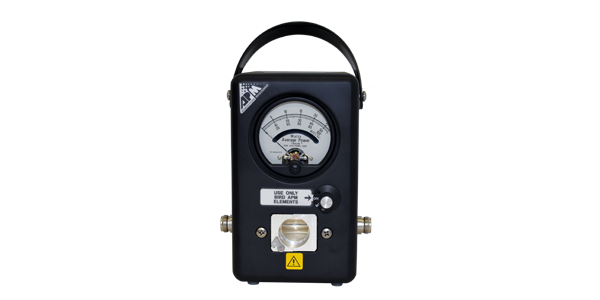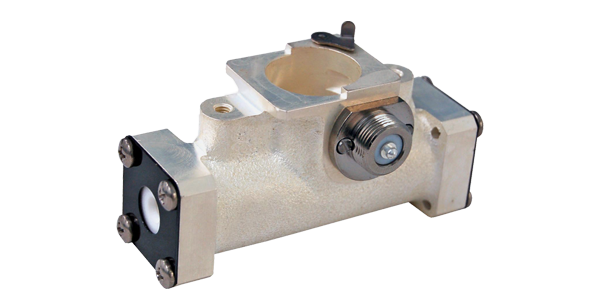
Bird wattmeters deliver accurate, repeatable RF power measurement in real-world conditions.
We’ll help you choose digital or analog and find the right fit fast.
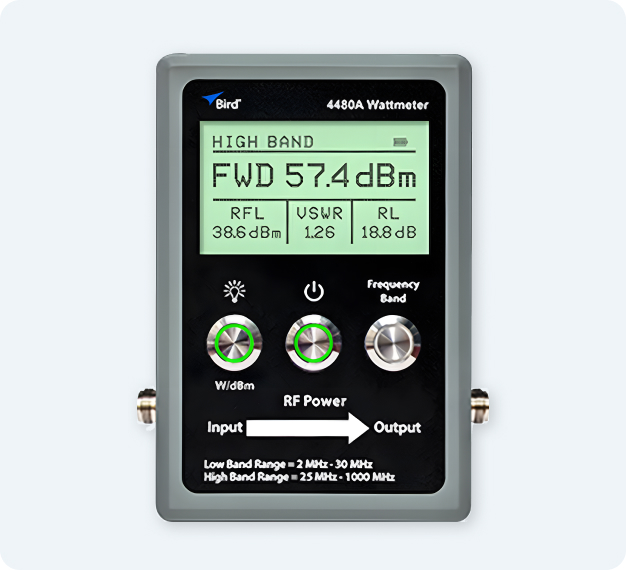
Avoid guesswork and rework with consistent, accurate power readings.
Reliable measurements in the field, on-site, or in demanding environments.
Get immediate results so you can troubleshoot quickly and keep systems running.
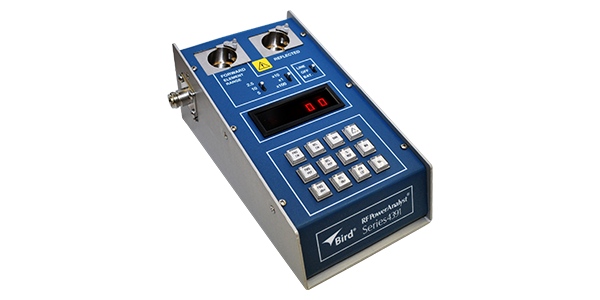
For detailed RF power measurement and modern systems
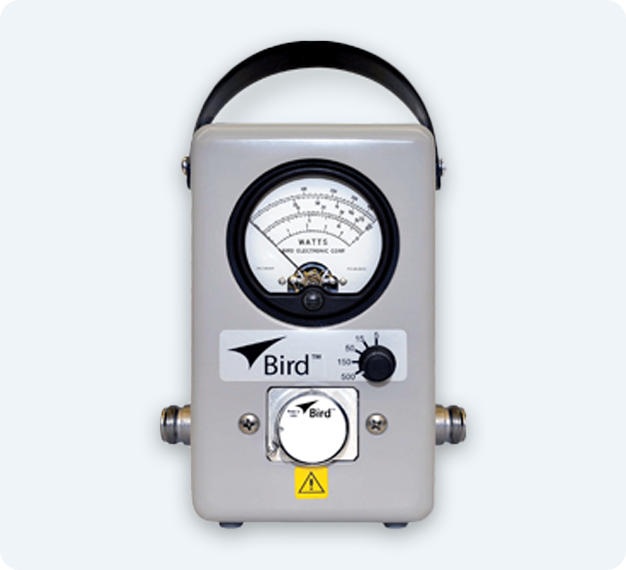
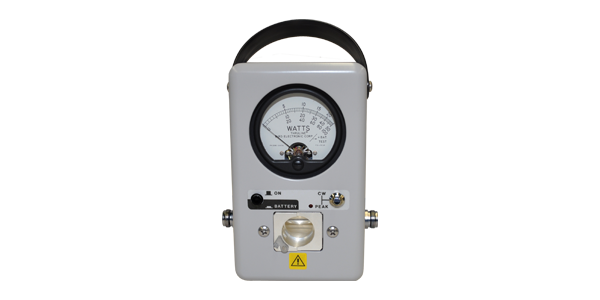
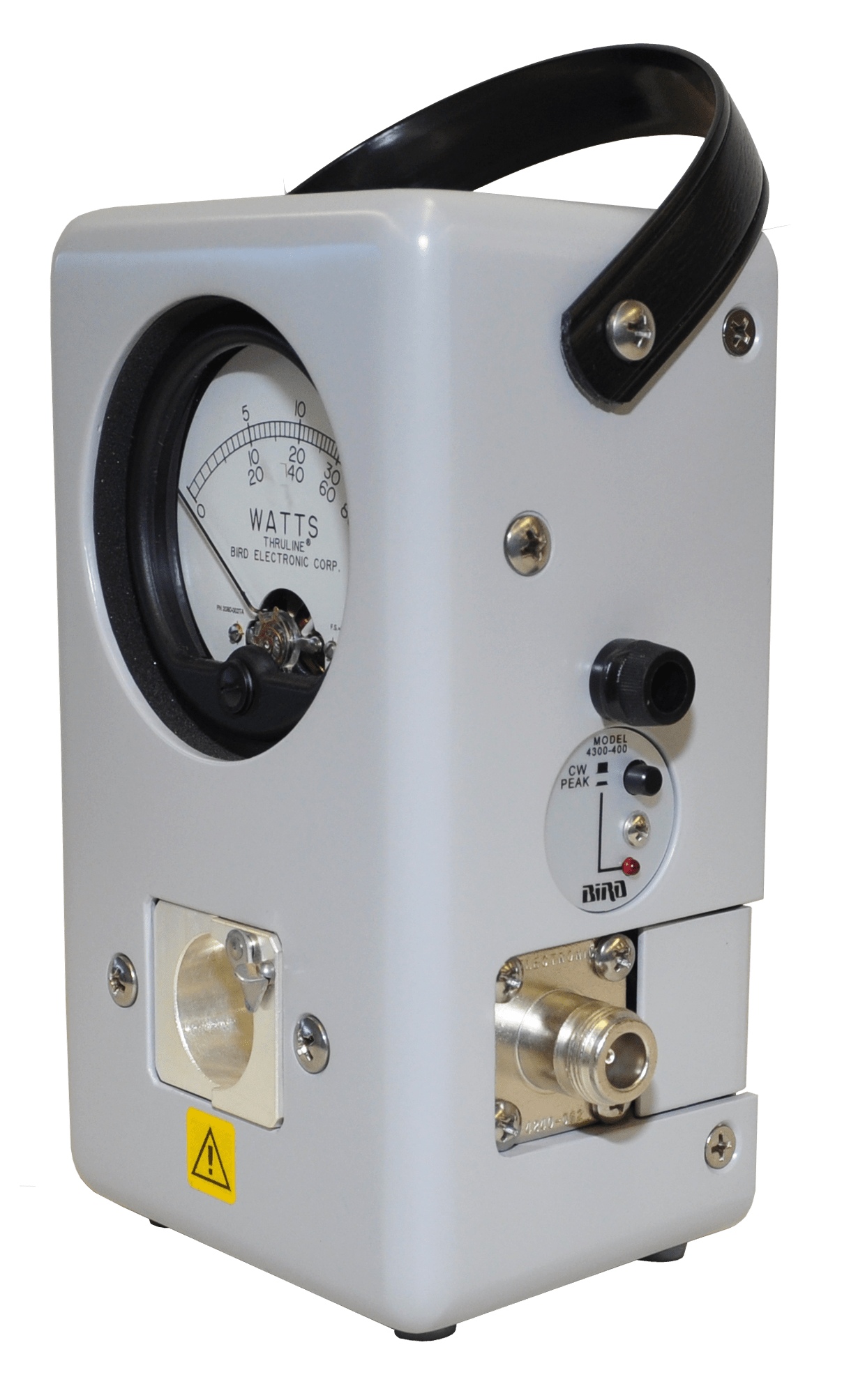
For simple, reliable RF power measurement in the field

Configure your RF wattmeter with the right components for accurate RF power measurement.
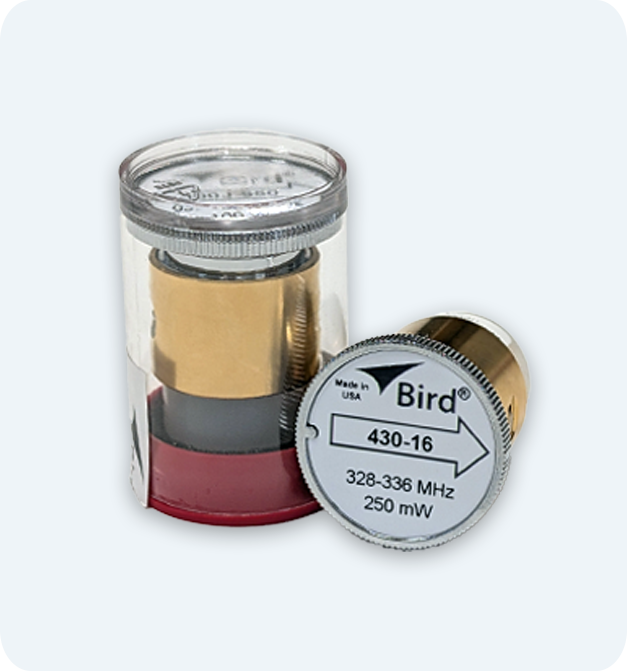
Match Your Measurement Range
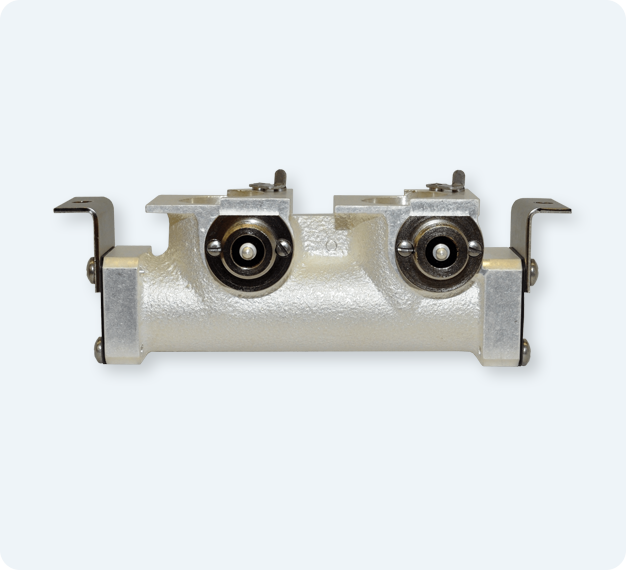
Measure Power in Your System
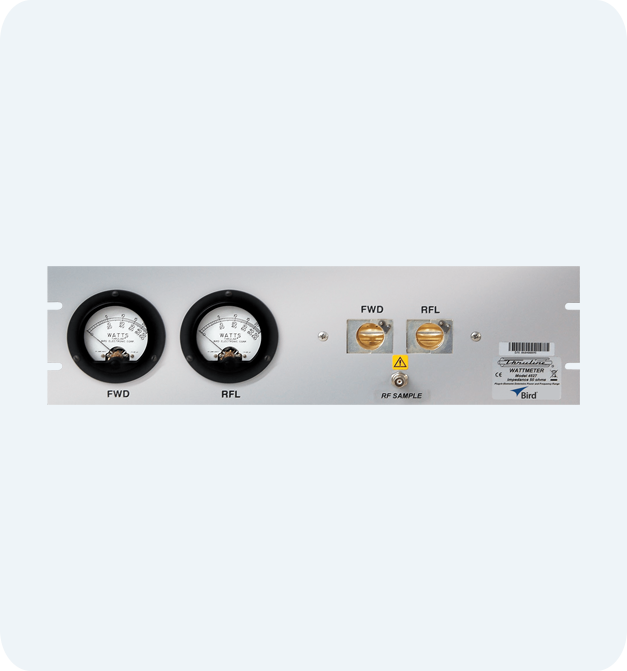
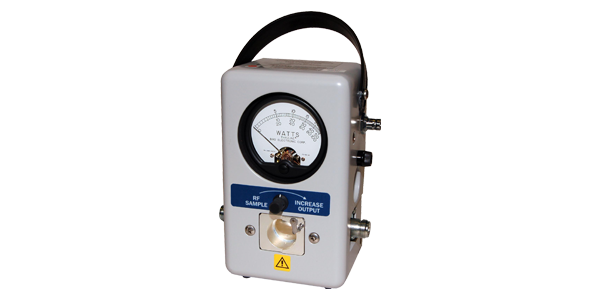
Monitor Power in Fixed Systems
Get help configuring the right setup for your application
Not sure which RF wattmeter is right for your application?
Avoid common RF measurement errors and choose the right tool with confidence.
Have more questions? Get Expert Help>
An RF power output meter (wattmeter) measures the actual power delivered by an RF signal, typically in watts (W) or dBm.
For example, it can read +30 dBm (1 W), +50 dBm (100 W), or even kilowatt-level signals, depending on the sensor.
Unlike a spectrum analyzer, it measures total power across a frequency range (e.g., 100 MHz to 3 GHz) rather than power at a single frequency, making it ideal for verifying transmitter output and system performance.
A voltmeter measures voltage, while a wattmeter measures power—and that difference matters in RF systems.
A voltmeter reads electrical potential (volts). For example, it might measure 10 V RMS across a load, but that alone doesn’t tell you how much power is being delivered.
A wattmeter measures real power (watts), combining voltage and current. For example, in a 50 Ω RF system, 10 V RMS ≈ 2 W (~+33 dBm), while 70.7 V RMS ≈ 100 W (+50 dBm).
Simple takeaway: A voltmeter tells you how much voltage is present, while a wattmeter tells you how much usable power is actually being delivered to the load.
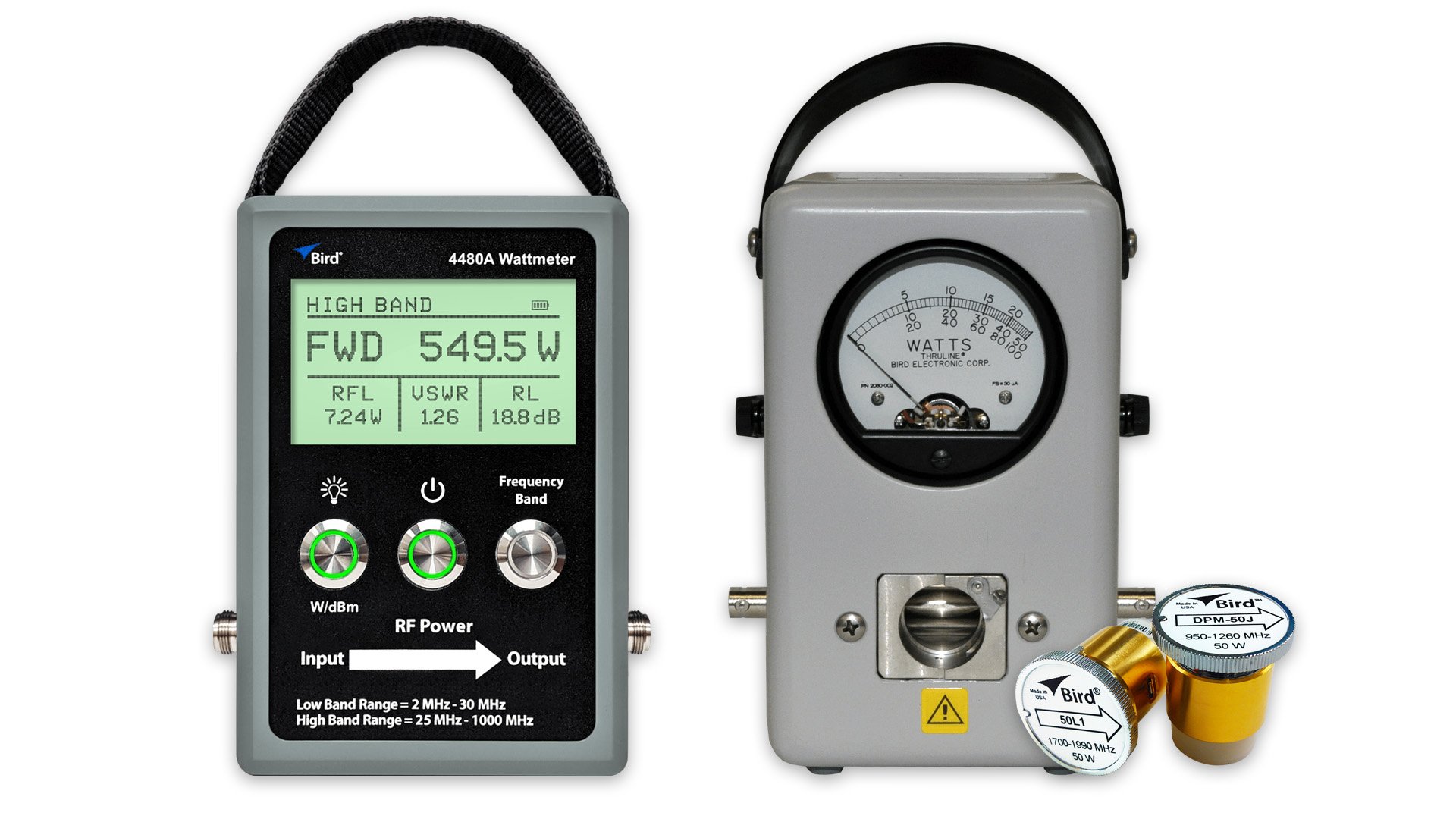
The two types of wattmeters are analog wattmeters and digital wattmeters - both measure forward and reflected power, but they differ in four key ways.
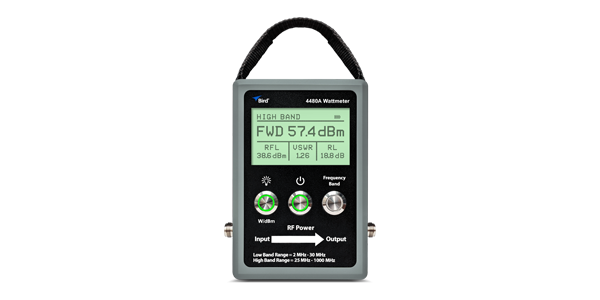
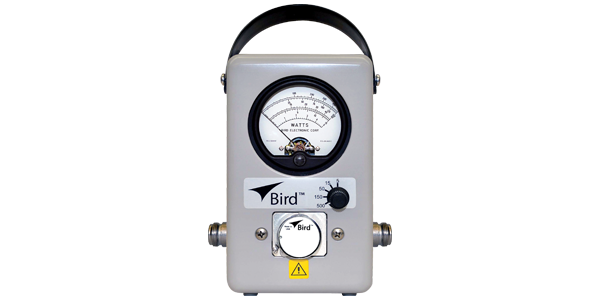
Display: Analog uses a scale and moving pointer while the digital wattmeter uses a numeric display.
Signal type: Analog is best for CW signals, while digital accurately measures CW and digitally modulated signals.
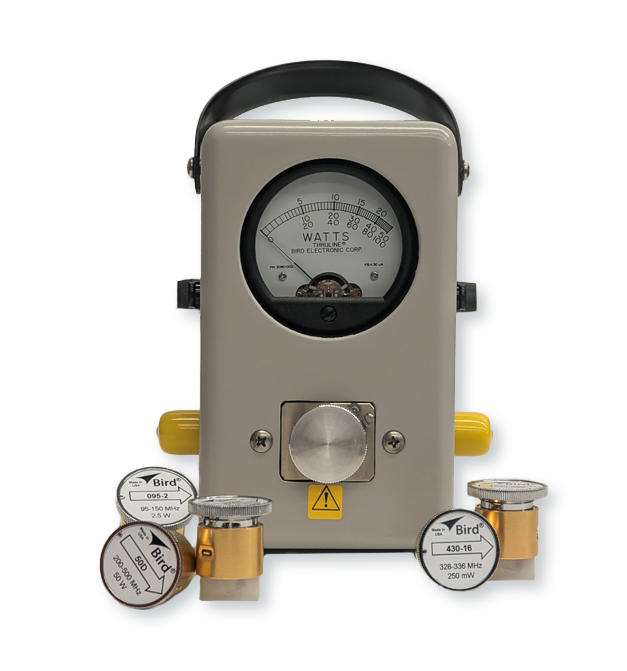
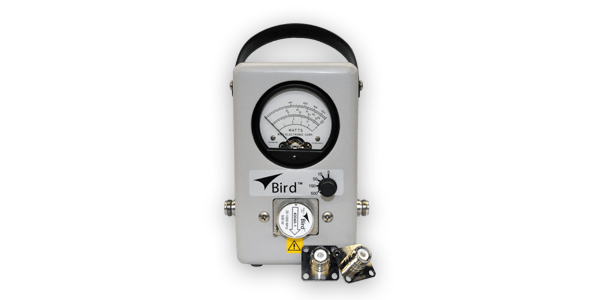
Elements: Analog wattmeters use narrow band plug-in elements (e.g., 5 W, 50 W, 500 W ranges), while digital wattmeters are element-free.
Accuracy: Analog is typically ±5% of reading or ± full scale, while digital wattmeters offer about ±4% accuracy across a wide range (e.g., –20 dBm to +60 dBm).
Filter by wattmeter type, element, and installation style to find the right setup for your application.
Showing 1 - 12 of 23 results
Choose a wattmeter you can rely on for accurate, repeatable RF power measurement—whether you're troubleshooting, verifying, or maintaining critical systems.